Bad actors in cryptocurrency markets use specific tactics for altcoin manipulation The crypto ecosystem lacks the strict oversight seen in traditional markets. This makes it an easy target for price manipulation.
Pump-and-Dump Schemes
Pump-and-dump schemes are the most common way to manipulate altcoins. These schemes work when traders team up to artificially drive up the price of a cheap cryptocurrency. They sell their holdings at the peak and leave other investors with worthless tokens. The CFTC says these schemes “create the illusion of optimism or pessimism in the market”.
Messaging platforms like Telegram and Discord have become hotspots for these schemes. A study found thousands of pump signals on these platforms in just six months, which shows how common this has become. The organisers first announce where and when the pump will happen. They reveal the specific coin right when the pump starts. The price shoots up within minutes and crashes quickly as organisers dump their holdings.
In fact, a 2025 study revealed that 74,037 tokens—about 3.59% of all tokens launched that year—showed signs of pump-and-dump schemes. The same people who set up the exchange pool dumped the tokens in 94% of suspected cases.
Related Article: What Are Tokens? Your Practical Guide to Digital Assets
Wash Trading and Fake Volume
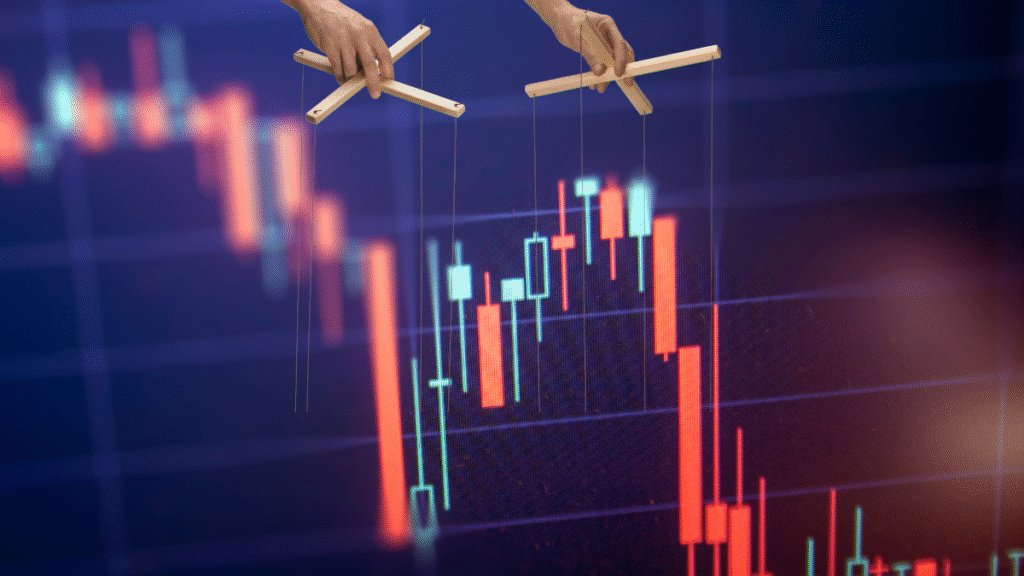
Wash trading happens when someone buys and sells an asset to themselves. This creates false market signals without any real change in ownership. It makes trading look active when it’s not. A Bitwise Asset Management report to the U.S. SEC showed that wash trading created about 95% of reported Bitcoin trading volume.
Research shows that wash trading might be behind 70% of volume on unregulated crypto exchanges. This trick works well in the altcoin market because there’s less trading activity. Traders use multiple accounts to trade with themselves. This creates fake volume and attracts investors who think the asset is getting popular.
Spoofing and Layering
Spoofing involves placing big orders with no plan to follow through. The main goal is to trick other traders about market sentiment. The spoofer cancels these orders once other traders react and profits from the price changes. The CFTC treats crypto market spoofing as a federal crime in the United States. Each violation can lead to 10 years in prison.
Layering takes things a step further than spoofing. Instead of one big fake order, traders place many fake orders at different prices. This creates an illusion of market depth. The market appears more liquid than it really is, which lets traders manipulate prices more subtly over time.
Insider Trading and Early Access
Crypto market insider trading usually involves using private information about upcoming exchange listings to make unfair profits. The University of Technology Sydney found clear evidence of this practise. Traders bought coins before listing announcements using private information.
The study showed possible insider trading in 10% to 25% of new cryptocurrency listings on Coinbase between September 2018 and May 2022. Blockchain data revealed specific wallets that kept buying coins just before announcements and selling afterward. These trades generated at least AUD 2.29 million in illegal profits.
Whale Manipulation and Flash Crashes
“Whales” in crypto are big players who hold enough cryptocurrency to affect market prices and liquidity. By August 2024, four Bitcoin wallets owned 3.56% of all Bitcoin. The top 113 wallets controlled more than 15.4%.
Whales can cause flash crashes by selling huge amounts at once. This leads to dramatic price drops in minutes. October 2025 saw the biggest liquidation cascade ever, with about AUD 29.05 billion in forced liquidations across exchanges. Altcoins took a bigger hit than Bitcoin during this event. Some lost up to 80% of their value.
This concentration of wealth opens the door to market manipulation. Spoofing, bear raiding, and strategic liquidity removal affect smaller altcoins more than established cryptocurrencies because they have less trading activity.
Early Warning Signs Before a Crash
Crypto investors need watchfulness and attention to specific market signals to spot potential altcoin manipulation before a crash. Early recognition of these warning signs helps investors protect their holdings and avoid big losses in the unpredictable cryptocurrency market.
Unusual Trading Volume Spikes
Sudden increases in trading activity without related news or developments often point to coordinated buying that attracts more investors. You should be cautious when volume surges by a lot from historical patterns. Crypto screeners track unusual volume and flag coins where trading volume doubles the average of the last 10 periods.
Price movements and volume patterns together can reveal suspicious activity. Manipulation might be happening if volume spikes while prices stay flat, or if volume drops during major price changes. On-Balance Volume (OBV) differences—where volume trends go against price trends—often come before big market moves.
Large Wallet Transfers to Exchanges
Major crypto movements from large wallets to exchanges often signal upcoming market downturns. Whales typically prepare to liquidate when they transfer substantial funds to exchanges, which can trigger cascading sell-offs. To name just one example, a single whale deposited 30 million USDC into Hyperliquid and opened a 10x short position on 700 BTC, worth about AUD 115.44 million in October 2025.
Transaction monitoring helps blockchain analysts track these movements. A notable case showed a dormant Bitcoin whale moving 2,000 BTC (worth about AUD 339.44 million) to 51 new addresses, systematically spreading funds in what looked like preparation to sell.
Low Liquidity with High Volatility
Market manipulation thrives in conditions with low liquidity and high volatility. Research shows a positive link between liquidity volatility and expected returns for large-cap cryptocurrencies (excluding Bitcoin). Investors just need higher returns to offset risks from unstable liquidity.
Markets work better when high liquidity pairs with low volatility as traders can remove price differences through arbitrage. Markets with low liquidity face higher manipulation risks since smaller trades can cause dramatic price swings. Small groups often manipulate prices when tokens show sharp price changes with limited trading volume.
Upcoming Token Unlocks or Vesting Events
Supply increases and potential price drops often follow token unlocks that release restricted tokens. Plasma (XPL) planned to unlock 88.89 million tokens worth AUD 56.42 million between October 20–25, 2025, adding 4.97% to its circulating supply.
LayerZero (ZRO) also scheduled a release of 25.71 million tokens valued at AUD 67.58 million, which would increase its circulating supply by 7.86%. Tokens like Arbitrum (ARB) and Aptos (APT) saw short-term price drops of 8-15% after major unlocks, but prices stabilised within 2-3 weeks.
Sudden Influencer Hype or Bot Activity
Market manipulation often follow suspicious spikes in social media activity. Bots rather than real investors drive many “trending” coins on X or Telegram. You can spot potential manipulation through repeated empty claims (“to the moon” or “next 100x”), anonymous influencers pushing unknown tokens, and similar posts appearing at once.
Argentine President Javier Milei promoted a memecoin that jumped in value minutes after his post in February 2025. Several wallets dumped their holdings within hours, crashing the price and leaving retail investors with heavy losses. The promotional post disappeared later. This shows how sophisticated manipulation strategies can include high-profile endorsements.
Tools to Detect Altcoin Manipulation
Investors need sophisticated tools to spot altcoin manipulation early. These tools track blockchain activities, market trends, and social signals. The crypto world has several specialised solutions that help spot suspicious activities before they affect asset prices.
On-Chain Analytics Platforms like Nansen
Blockchain data reveals patterns that casual observers might miss. Nansen, a leading analytics platform, has tagged over 500 million wallet addresses to spot key players in the crypto ecosystem. This tagging system lets investors track “smart money” movements—wallets owned by successful traders and institutions. Users can spot market manipulation before prices change.
These platforms monitor exchange flows, token transfers, and wallet activities that signal market changes. Their machine learning algorithms can spot unusual behaviours like wash trading or potential rug pulls. Nansen’s data intelligence capabilities led to a 20x revenue jump in just one year.
Market Scanners such as DEXTools and CoinGecko
Market scanners show up-to-the-minute trading activities across exchanges. DEXTools displays buy and sell orders, recent transactions, and liquidity changes. The platform’s DEXTscore metric and Audits Tab help users assess project reliability—a vital step to identify manipulated tokens.
DEXTools alerts users about unusual trading volumes, sudden liquidity changes, and price differences across exchanges that might indicate fake volume or coordinated altcoin manipulation. CoinGecko tracks market cap, trading volumes, and shows a “Trending” section for tokens with unusual activity. Price alerts notify users about suspicious price movements based on custom conditions.
Sentiment Trackers like LunarCrush
Social media analysis tools measure market sentiment and detect artificial hype. LunarCrush combines and analyses data from social platforms. The platform tracks views, likes, comments, and retweets. It calculates sentiment scores based on positive posts and their engagement levels.
LunarCrush’s AltRank™ and Galaxy Score™ blend social and market data to assess asset performance. Users can spot artificial hype, coordinated campaigns, and FOMO-driven behaviour that often come before manipulated price movements.
Chart Indicators: RSI, Volume Divergence, Whale Ratio
Technical indicators signal potential altcoin manipulation. RSI shows overbought (above 70) or oversold (below 30) conditions that might point to manipulated prices. Volume divergence happens when price and volume move opposite ways, often showing weakening market momentum and possible manipulation.
Exchange Whale Ratio shows large holders moving funds to exchanges, usually before sell-offs. A rising ratio suggests whales might sell soon. A dormant whale wallet came alive in August 2025 and sold 24,000 BTC. Bitcoin’s price dropped within minutes—showing how whale movements shake market stability.
Crypto investors can create a complete early warning system by using these tools together. This approach helps spot potential altcoin manipulation before big losses happen.
How to Analyse Social Media for Red Flags
Social media platforms have turned into breeding grounds for altcoin manipulation. Scammers now use sophisticated tactics to create fake hype. You need to watch out for specific red flags that pop up in a variety of platforms.
Anonymous Accounts Promoting Obscure Tokens
Take a close look at the profile characteristics of accounts that promote lesser-known cryptocurrencies. Legitimate influencers usually show their real identities and have years-old reputations. Manipulators hide behind anonymous profiles and aggressively push obscure tokens. Watch for accounts with generic profile pictures, new profiles, or barely any personal information. Anyone who hides their identity while promoting low-cap tokens should raise red flags.
Coordinated Posts and Repetitive Hashtags
Be alert to sudden waves of similar social media posts that show up at the same time on different platforms. Market manipulators often use coordinated messaging where multiple accounts share suspiciously similar content about a specific token. Research shows Telegram “pump-and-dump” groups work like secret clubs with paid entry tiers and “early alerts” for insiders. Repetitive hashtags, similar phrasing, and synchronised posting times point to organised manipulation rather than real interest.
Deleted Promotional Content after Price Spikes
Manipulators often use a “promote and delete” approach. They flood platforms with excited claims about a token, then erase everything after they’ve manipulated the price. A real example happened in February 2025, when Argentine President Javier Milei promoted a memecoin that briefly shot up in value. Several wallets dumped their holdings and crashed the price, followed by the promotional post disappearing. When promotional content vanishes after dramatic price movements, it usually means someone planned it.
Fake Engagement and Bot-Driven Hype
Always check if engagement looks real by looking at comment quality and follower profiles. Many “trending” coins on X or Telegram get attention through bot activity instead of real investor interest. Studies show about 10% of crypto influencers’ followers are fake, with some projects having much higher percentages. Bot patterns include unusually fast engagement, generic praise in comments, and accounts created in groups with matching characteristics.
Steps to Protect Your Crypto Investments
Your crypto investments need protection from altcoin manipulation through proactive strategies and smart decisions. Market risk awareness is just the start—you need concrete steps to protect your assets.
Verify Project Fundamentals and Team Transparency
The original defence against manipulation starts with checking a project’s team credentials. Research shows 64.7% of top crypto projects don’t show their team members on their websites, which makes transparency a vital indicator. You should check LinkedIn profiles and GitHub activities to confirm their experience. On top of that, it helps to break down token distribution patterns—fraudulent projects usually have hidden or asymmetric allocations. A study shows 21.5% of the top 1,000 crypto projects don’t list a single employee on LinkedIn, which proves why verifiable team information matters.
Avoid FOMO and Parabolic Price Moves
FOMO (fear of missing out) guides investors toward bad decisions. Research reveals 84% of crypto holders made emotional decisions because of FOMO, and 63% believe these choices damaged their portfolios. Clear entry criteria matter, so you should avoid chasing parabolic price movements that usually lead to big corrections. The best approach is to set profit targets instead of following market hype.
Diversify your Portfolio Across Assets
Your risk management improves when you spread investments across different cryptocurrencies. Expert advice suggests keeping crypto investments between 5-10% of your total portfolio, especially if you’re new. Many digital asset experts use an 80/20 approach—80% goes to established cryptocurrencies and 20% to emerging projects. This balances stability and growth potential.
Related Assets: The Future of Digital Assets Regulation in Australia
Set Stop-Loss and Take-Profit Levels
Automatic exit strategies shield your investments during market swings. Stop-limit orders mix a trigger price (stop) with an execution price (limit) to give you better trade control. To name just one example, if Bitcoin costs AUD 45,869.71, a stop-loss at AUD 42,811.73 limits your loss to about 10%. Take-profit orders secure your gains at target prices and remove emotions from trading.
Follow Credible Sources, Not Hype Groups
Verified, established information sources work better than anonymous “tip” channels. Telegram “pump-and-dump” groups work like secret clubs with paid tiers and “early alerts” for insiders. Evidence-based analytics and established crypto news outlets should be your focus instead of social media buzz. Real projects share honest updates about their challenges and progress, which builds lasting confidence rather than quick excitement.
Conclusion – Altcoin Manipulation
Moving through the cryptocurrency market needs constant watchfulness, especially with altcoins that bad actors can manipulate through deceptive practises. This piece looks at many tactics these actors use, from pump-and-dump schemes to wash trading and whale manipulation. Warning signs like unusual trading volumes and suspicious wallet transfers often show up before market crashes.
Knowledge about these manipulation techniques helps you make better decisions about crypto investments. Tools like Nansen, DEXTools, LunarCrush, and technical indicators give you great data to spot potential scams before they hurt your portfolio. These resources should become part of your research process to succeed in this volatile market.
Social media analysis is a vital skill for crypto investors. Red flags appear everywhere – anonymous accounts, coordinated posting patterns, and content that disappears right after price spikes. Manipulated tokens often come with fake engagement and bot-driven hype. Your best defence is a healthy dose of scepticism against persuasive but deceptive marketing.
Protection strategies are the foundations of smart investing. You can reduce your risk by checking project fundamentals, avoiding FOMO-driven choices, broadening your assets, setting stop-loss levels, and following trusted information sources.
The crypto market gives you big opportunities but carries serious risks. While the tactics keep changing, you can still spot the basic patterns of altcoin manipulation. Spotting these patterns early helps you avoid scams and stay safe. The sort of thing i love about this financial frontier is how education and caution become your strongest tools in the crypto world.
How can I protect my crypto investments from market manipulation?
To protect your investments, avoid using leverage, diversify your portfolio, verify project fundamentals, set stop-loss orders, and only invest what you can afford to lose. Focus on established cryptocurrencies and hold for the long term rather than trying to time the market.
What are some warning signs of potential altcoin manipulation?
Watch for unusual trading volume spikes, large wallet transfers to exchanges, sudden price movements without corresponding news, coordinated social media hype, and anonymous accounts promoting obscure tokens. Use on-chain analytics tools to monitor suspicious activity.
Are all cryptocurrencies equally vulnerable to manipulation?
No, established cryptocurrencies with higher market caps and liquidity, like Bitcoin and Ethereum, are generally less vulnerable to manipulation compared to smaller altcoins. However, all crypto assets can be affected by market-wide events and sentiment shifts.
How do pump-and-dump schemes work in the crypto market?
Pump-and-dump schemes involve coordinated groups artificially inflating the price of a low-value cryptocurrency through hype and misinformation, then selling their holdings at the peak, leaving unsuspecting investors with worthless tokens. These often occur on messaging platforms and social media.
What tools can I use to detect suspicious crypto market activity?
Useful tools include on-chain analytics platforms like Nansen, market scanners such as DEXTools and CoinGecko, sentiment trackers like LunarCrush, and technical indicators like RSI and volume divergence. These can help identify unusual trading patterns and potential manipulation attempts.