
Every four years or so, Bitcoin is halved, which results in a 50% reduction in the incentive that miners earn for validating transactions. The most recent halving occurred on May 11, 2024, reducing the block reward to 6.25 BTC. This programmed event represents one of the most significant milestones in Bitcoin’s economic model.
The meaning of the bitcoin halving is deeply rooted in the cryptocurrency’s design to create digital scarcity. Essentially, this mechanism gradually decreases the rate at which new bitcoins enter circulation. Currently, about 19.7 million bitcoins are already in circulation, leaving only 1.3 million left for mining. The BTC halving history shows these events typically generate market excitement, with previous halvings often followed by price increases. When is the next Bitcoin halving? Investors are already looking ahead to April 2028, while the final bitcoin is projected to be mined around 2140. Understanding bitcoin halving dates and their potential impact helps investors and enthusiasts grasp how this unique deflationary system works.
Understanding Bitcoin Mining and Block Rewards
What is Bitcoin Mining?

Bitcoin mining is the foundation of the cryptocurrency’s network security, transaction verification, and the issuance of new coins. Miners across the globe employ specialised computers to solve complex cryptographic puzzles through a process known as proof-of-work. These puzzles require substantial computational power to solve, but are easily verified once completed.
During mining, computers compete to find a cryptographic number (hash) that meets specific criteria. This involves adjusting a value called a nonce until the resulting hash falls below a target value. The first miner to solve this mathematical challenge is permitted to add a new block of transactions to the blockchain. In order to maintain network security and consistent transaction processing, this validation procedure is carried out roughly every ten minutes.
Block Rewards as Miner Incentives
Block rewards comprise two components: newly generated bitcoins (block subsidy) and transaction fees. This approach offers miners a financial incentive to contribute their computational resources in order to preserve the network’s functionality and security,
When Bitcoin launched in 2009, miners received 50 BTC for each validated block. Following the most recent halving on April 20, 2024, this reward decreased to 3.125 BTC. Additionally, miners collect fees from all transactions included in their validated blocks, which will become increasingly significant as block subsidies diminish over time.
The mining difficulty adjusts automatically every 2,016 blocks to maintain a consistent 10-minute block generation time. This adaptive mechanism ensures that, regardless of how many miners join or leave the network, new blocks are being produced at a steady rate.
Why are Rewards Reduced Over Time?
Bitcoin’s design incorporates a systematic reduction of block rewards through a process called halving. Every 210,000 blocks (approximately four years), the block subsidy is halved. This deflationary mechanism serves multiple purposes:
First, it creates a predictable issuance schedule, gradually approaching the maximum supply cap of 21 million bitcoins. Currently, about 19.67 million bitcoins (over 93% of the total supply) are already in circulation.
Furthermore, this diminishing reward structure resembles the extraction of precious metals, such as gold, which becomes increasingly complex and resource-intensive over time. The controlled supply establishes scarcity as a fundamental property of Bitcoin.
Transaction fees will soon take over as the main motivator for miners as block subsidies continue to decline. The last bitcoin is planned to be mined around 2140, at which point the network will transition entirely to a fee-based incentive model.
Bitcoin Halving Explained Step-by-Step

The periodic reduction of Bitcoin’s mining reward represents one of the most fundamental aspects of the cryptocurrency’s economic design. Let’s examine this mechanism in detail.
What is Bitcoin Halving?
Bitcoin halving refers specifically to the event where the reward miners receive for validating new blocks is cut by 50%. This programmed reduction occurs after every 210,000 blocks are mined, which happens approximately every four years. Throughout Bitcoin’s history, there have been four halving events:
- November 28, 2012: Reward decreased from 50 to 25 BTC
- July 9, 2016: Reward decreased from 25 to 12.5 BTC
- May 11, 2020: Reward decreased from 12.5 to 6.25 BTC
- April 20, 2024: Reward decreased from 6.25 to 3.125 BTC
In fact, this mechanism can be compared to a scheduled pay cut that miners must accept to continue participating in the network. Yet unlike conventional economic systems, these reductions are predetermined and transparent to all participants.
How Halving Affects New BTC Supply
The halving process directly controls the rate at which new bitcoins enter circulation. Before April 2024, approximately 900 new bitcoins were mined daily. Following the most recent halving, the number of new bitcoins produced dropped to approximately 450 per day.
Consequently, each halving creates a potential supply shock if demand remains steady or increases. Since Bitcoin’s maximum supply is capped at 21 million coins, the halving ensures that the remaining 1.5 million bitcoins will be released gradually over the next 116 years. This controlled issuance establishes a disinflationary trend, making Bitcoin increasingly scarce over time.
Why Halving is Built Into the Bitcoin Code
Bitcoin’s creator, Satoshi Nakamoto, implemented the halving mechanism for several strategic reasons, although never explicitly explaining the design choice.
One prevailing theory suggests that higher rewards were necessary initially to incentivise early adoption and network security. As the value of each coin increased with network growth, smaller rewards would still provide sufficient incentive. Moreover, the halving mechanism directly counters the inflationary tendencies seen in traditional fiat currencies, where central banks can print money without limits.
The halving protocol establishes a systematic mechanism to reduce Bitcoin’s inflation rate, mirroring the diminishing returns observed in mining precious metals. Through this design, Bitcoin achieves a unique property as a deflationary asset, establishing predictable scarcity that many believe contributes significantly to its value proposition.
Effects of Bitcoin Halving on the Ecosystem
The bitcoin halving creates ripple effects throughout the cryptocurrency ecosystem, impacting key stakeholders in various ways.
Impact on Miner Profitability and Operations
Every halving presents miners with an immediate challenge – their block reward compensation drops by 50% overnight. This revenue reduction forces miners to reassess profitability thresholds against operational costs, such as electricity and hardware maintenance. Miners typically respond through several strategies:
- Industry consolidation through mergers and acquisitions, exemplified by Riot Platforms’ attempted hostile takeover of Bitfarms
- Investment in improved computing infrastructure to increase hash rate efficiency
- Exploration of alternative revenue streams, such as offering computing power for AI model training
Nevertheless, some miners inevitably cease operations if Bitcoin’s price doesn’t rise sufficiently to offset their reduced rewards.
Investor Behaviour Before and After Halving
Historically, trading volume sees its most significant increase approximately 60 days before bitcoin halving events. Investors often accumulate Bitcoin in anticipation of potential price increases, creating a self-fulfilling prophecy effect. According to research by CoinLedger, Bitcoin’s value increased by 51% and 83% respectively, in the six months following the last two halvings.
Market Volatility and Price Speculation
Bitcoin typically experiences heightened volatility around periods of halving. Research indicates short-term volatility decreases (30-day realised volatility drops) yet long-term volatility increases (180-day realised volatility rises) following halvings. This suggests halvings create short-term stability disruptions as the market adjusts to new supply conditions.
Though many expect price appreciation after halvings, the relationship isn’t guaranteed. Historical patterns indicate diminishing percentage returns with each cycle. BTC surged approximately 5,500% after the first halving, but only about 700% in the current cycle.
Bitcoin Halving Dates and Future Outlook
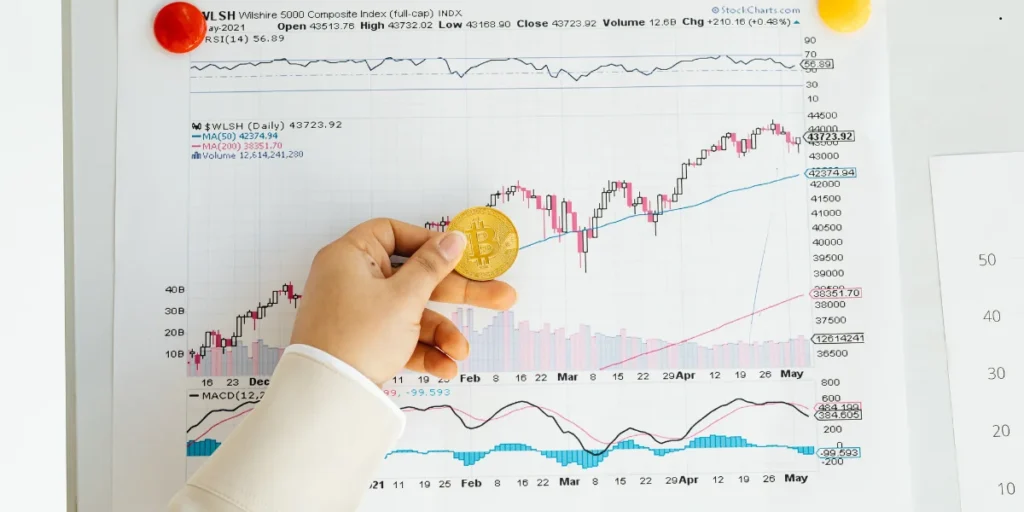
The countdown to each bitcoin halving marks a pivotal moment in the cryptocurrency’s evolution, with far-reaching implications for its economics and adoption.
BTC Halving History: 2012 to 2024
Throughout Bitcoin’s history, four halvings have systematically reduced the mining rewards:
- First halving (November 28, 2012): Rewards decreased from 50 to 25 BTC per block
- Second halving (July 9, 2016): Rewards fell to 12.5 BTC per block
- Third halving (May 11, 2020): Rewards reduced to 6.25 BTC per block
- Fourth halving (April 20, 2024): Rewards dropped to 3.125 BTC per block
Notably, after each halving event, Bitcoin’s price showed significant increases in the following months.
Bitcoin Halving 2028
The upcoming bitcoin halving is to occur around April 17, 2028, upon reaching block height 1,050,000. The block reward will then drop to 1.5625 BTC. This represents the fifth reduction in Bitcoin’s programmed supply schedule, continuing its deflationary trajectory.
What Happens When all BTC is Mined (2140)
By 2140, all 21 million bitcoins would have been mined. Beyond this point, miners will no longer receive block subsidies; instead, they will rely entirely on transaction fees. As mining rewards disappear, transaction fees are likely to increase to maintain network security. Ultimately, this transition to a fee-only model will test Bitcoin’s long-term economic sustainability without inflation-based rewards.
Conclusion – Bitcoin Halving
By 2140, the 21 million bitcoins will be halved, influencing the cryptocurrency’s scarcity and value proposition. The systematic reduction of mining rewards every four years creates a predictable deflationary mechanism unlike traditional currencies. Following the April 2024 halving , which reduced block rewards to 3.125 BTC, miners faced immediate profitability challenges, while investors anticipated potential price appreciation.
Looking back at previous halvings since 2012, each event triggered significant market activity, though with diminishing percentage returns over time. These events have historically been correlated with increased trading volumes and price volatility as the market adjusts to new supply conditions.
This unique supply schedule will continue until approximately 2140, with the next halving expected around April 2028. Subsequently, the reward will decrease to just 1.5625 BTC per block. Bitcoin’s long-term sustainability will therefore depend on transaction fees eventually replacing block subsidies as the primary incentive for miners.
The genius of Bitcoin’s design lies partly in this programmed scarcity. Bitcoin follows a transparent and immutable issuance schedule, approaching its 21 million coin cap. This deflationary property essentially mimics the process of precious metals mining, becoming more resource-intensive over time.
Bitcoin halvings thus reflect Satoshi Nakamoto’s vision of a decentralised currency with built-in protection against inflation. The periodic reward reductions balance initial incentives for early adoption with long-term scarcity, creating a monetary system where diminishing supply meets growing demand. Undoubtedly, future halvings will continue to represent watershed moments for the entire cryptocurrency ecosystem as Bitcoin progresses toward its final stages of issuance.
What is Bitcoin halving, and why does it occur?
Bitcoin halving is a programmed event cutting miners’ rewards for validating new blocks by 50%. It occurs approximately every four years to control the rate at which new bitcoins enter circulation and create digital scarcity.
How does halving affect Bitcoin miners?
Halving significantly impacts miners by cutting their block reward compensation in half overnight. This forces miners to reassess their profitability, potentially leading to industry consolidation, investment in more efficient hardware, or exploration of alternative revenue streams.
How does halving influence Bitcoin’s price?
Historically, Bitcoin’s price has shown significant increases in the months following halving events. However, the relationship isn’t guaranteed, and each cycle has shown diminishing percentage returns.
What will happen when all Bitcoins are mined?
By 2140, it is expected that all 21 million Bitcoins will have been mined. After this point, miners will no longer receive block subsidies and will rely entirely on transaction fees for income. This transition will test Bitcoin’s long-term economic sustainability.