
Traditional Australian banks often charge fees for every transaction made in foreign currency, and over a 2-week holiday, these small charges can add up to hundreds of dollars. For seniors planning overseas travel in 2026, finding the best travel card for seniors in Australia in 2026 has become essential to avoid this costly trap. Compared to using standard Australian bank cards overseas, the right travel money card can save 2-3% on every transaction through lower foreign exchange fees and better exchange rates.
The best travel cards Australia offers now include options beyond traditional prepaid cards from major banks. In fact, the best international travel card solutions for Australians in 2026 range from zero-fee travel debit cards to crypto-backed options that use interbank rates, helping retirees stretch their holiday budgets further.
Traditional Travel Cards vs. Crypto Debit Cards: A 2026 Comparison
The Old Way
Travel money cards from banks and foreign exchange retailers operate as prepaid products that require loading Australian dollars upfront. Users convert their AUD into selected currencies before departure, which locks in the exchange rate at that moment. While this prevents exchange rate fluctuations from affecting the holiday budget, the initial conversion often includes hidden markups.
Currency conversion fees can reach up to 5% or more on some cards. Beyond the conversion markup, traditional travel cards also charge additional fees for initial loading, reloading the balance mid-trip, and ATM withdrawals overseas. Some products also enforce minimum top-up amounts, up to AUD 152.90 per reload. These inflexible requirements make it difficult for seniors to manage smaller, frequent top-ups during extended holidays.
Most credit cards carry a foreign transaction fee of 1-3.5% on all international purchases. Traditional debit cards from major Australian banks charge fees for overseas purchases, ATM withdrawals, and even balance checks abroad.
The New Way
Crypto debit cards function like regular Visa or Mastercard products at merchants worldwide, but the underlying mechanics differ substantially. When a user loads funds onto a crypto card, they can convert Australian dollars into stablecoins (digital currencies pegged to the US dollar) or hold cryptocurrency. At the point of purchase, the card automatically converts the digital balance into the required fiat currency using Interbank exchange rates.
Interbank rates represent the wholesale exchange rate that banks use when trading currencies among themselves. Crypto.com applies this Interbank rate for conversions, which typically offers better value than the retail rates used by traditional travel cards. CoinJar operates similarly, converting crypto holdings at their best available rates for each transaction.
The fee structures vary by provider and card tier. CoinJar charges 1% on purchases (returned as rewards points) and 2.99% on foreign transactions. In contrast, Crypto.com’s fee structure depends on the card tier: the entry-level Midnight Blue card charges 3% on foreign transactions, while higher tiers eliminate foreign transaction fees entirely. ATM withdrawals on Crypto.com cards incur a 2% fee only after exceeding the monthly free allowance, which ranges from AUD 305.80 to AUD 1,528.99 depending on the card tier.
The Convenience Factor: Spending Without the ‘Exchange Booth’ Headache

Global Acceptance
Crypto-linked cards operate on established payment networks, which means they function identically to standard debit cards at checkout. Visa crypto-linked cards are accepted at any of Visa’s 80 million merchant locations worldwide. Mastercard-backed crypto travel cards extend this reach even further, with acceptance at over 150 million locations globally. Whether purchasing groceries in Rome, booking tours in Tokyo, or paying for meals in Bangkok, the transaction appears to the merchant as a standard card payment.
The conversion occurs automatically at the moment of sale. When a traveler taps their crypto card at a terminal, the card processor initiates an immediate sale of their crypto balance or stablecoin holdings. The merchant receives payment in their native currency via the Visa or Mastercard networks. This process runs on standard PCI-compliant card rails, which explains its widespread acceptance among millions of merchants worldwide. To the merchant and payment processor, these transactions look the same as any other Visa or Mastercard transaction.
The Stablecoin Secret
Stablecoins are digital tokens pegged to stable assets, such as the US dollar. Research commissioned by Visa reveals that 60% of respondents would try stablecoins for international payments if offered through their existing bank app or card. The appeal centres on predictability. Unlike volatile cryptocurrencies such as Bitcoin, stablecoins maintain consistent value, allowing travellers to lock in exchange rates before departure.
For Australian retirees, this means converting AUD to US dollar stablecoins at a favourable rate, then spending that balance overseas without worrying about daily currency fluctuations. Stablecoins transfer globally in seconds without relying on correspondent banks, and transactions settle instantly via blockchain rather than routing through multiple intermediaries. The process operates 24/7, unlike traditional banking hours. Small businesses already recognise this advantage, with 78% reporting they need to plan days or weeks ahead for international payments using conventional methods.
Related Article: The High-Yield Secret: Earn 10% with Stablecoin Interest Rates
How to Set Up Your Travel Card (Step-by-Step for Beginners)
Choosing Your Card
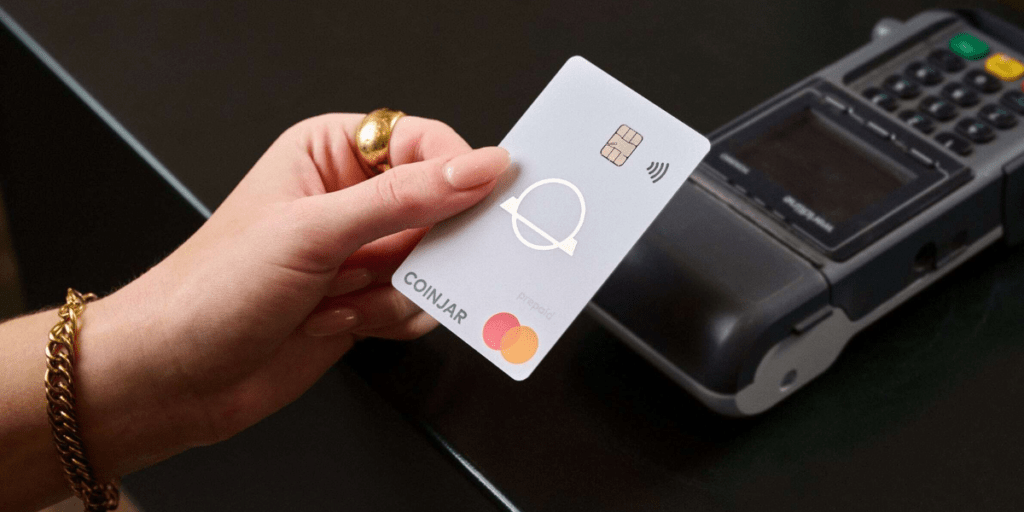
CoinJar Card stands out for its simplicity, charging 1% on transactions (returned as rewards), supporting 30 cryptocurrencies, and integrating with Apple Pay and Google Pay. Crypto.com offers tiered options, with the entry-level Midnight Blue card requiring no staking and higher tiers offering benefits such as airport lounge access. Stables focuses exclusively on stablecoins, eliminating volatility concerns while charging no fees for receiving, storing, or spending USDC via their app.
Verification (KYC)
Account approval requires an Australian passport or driver’s licence, along with proof of residential address. The verification process involves photographing a valid government-issued ID and taking a selfie for identity confirmation. Applications undergo internal compliance checks, and providers reserve the right to decline based on risk assessment.
Loading Your Funds
CommBank restricts cryptocurrency payments to AUD 15,289.90 per month across all accounts, while NAB declines certain transfers entirely. The workaround involves using Australian exchanges like Swyftx or BTC Markets, which support free Osko transfers. Users deposit AUD, purchase stablecoins like USDC, then transfer those to their card wallet.
Conclusion – Best Travel Cards for Seniors
Australian retirees planning overseas travel in 2026 now have alternatives to fee-heavy traditional travel cards. Crypto debit cards from providers like CoinJar and Crypto.com deliver better exchange rates through interbank pricing, whilst stablecoins allow seniors to lock in currency rates before departure. These cards work identically to standard Visa or Mastercard products at millions of merchants worldwide. As a result, retirees can save hundreds of dollars on international trips by choosing the right travel card solution.
“For long-term investors, using a crypto travel card to fund overseas trips can be an effective way to harvest gains during the peak distribution phase of the Bitcoin 4-year cycle.“
What makes crypto debit cards better than traditional travel cards for overseas spending?
Crypto debit cards use interbank exchange rates, which are the wholesale rates banks use when trading currencies amongst themselves. This typically provides better value than the retail rates offered by traditional travel cards. Additionally, many crypto cards have lower or no foreign transaction fees on higher tiers, whereas traditional travel cards often charge 1-3.5% per transaction plus conversion fees of up to 5%.
How do crypto travel cards work at overseas merchants?
Crypto travel cards function identically to regular Visa or Mastercard debit cards at checkout. When you make a purchase, the card automatically converts your cryptocurrency or stablecoin balance into the local currency using interbank rates. The merchant accepts payment in their local currency via the usual Visa or Mastercard network, making the transaction look like any other card payment.
What are stablecoins and why are they useful for travellers?
Stablecoins are digital tokens pegged to stable assets like the US dollar, maintaining consistent value unlike volatile cryptocurrencies such as Bitcoin. For travellers, this means you can convert your Australian dollars to stablecoins at a favourable rate before departure, then spend that balance overseas without worrying about daily currency fluctuations. Transactions settle instantly and operate 24/7, unlike traditional banking systems.
What documents do I need to verify my identity for a crypto travel card?
You’ll need an Australian passport or driver’s licence, along with proof of your residential address. The verification process involves photographing your valid government-issued ID and taking a selfie for identity confirmation. Applications undergo internal compliance checks, and providers may decline applications based on their risk assessment.
How can I transfer Australian dollars to my crypto card if my bank blocks cryptocurrency payments?
Some Australian banks restrict or decline cryptocurrency transfers, with CommBank limiting payments to AUD 15,289.90 per month. The solution is to use Australian cryptocurrency exchanges like Swyftx or BTC Markets, which support free Osko transfers. You deposit AUD into the exchange, purchase stablecoins like USDC, then transfer those stablecoins to your crypto card wallet.