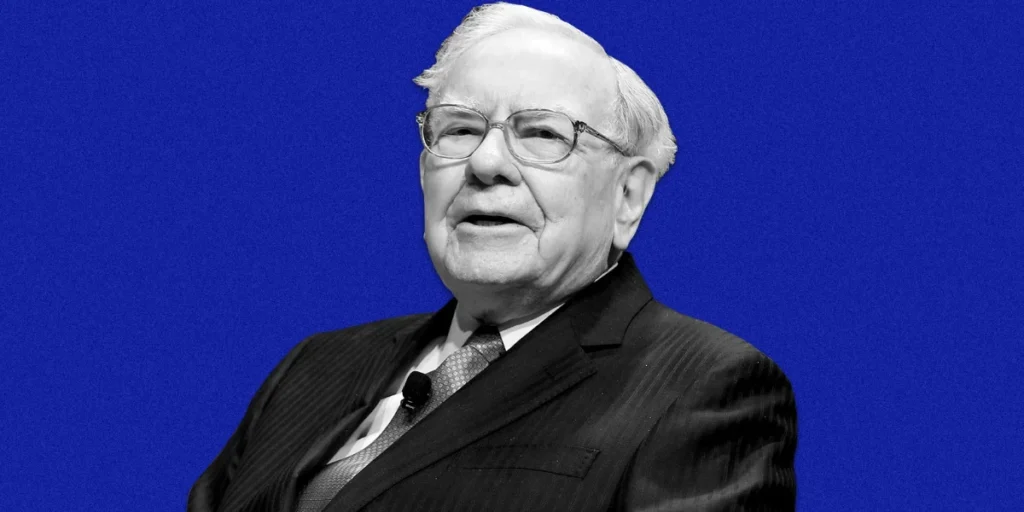
Warren Buffett is now the tenth richest person worldwide, with an estimated net worth of $148.5 billion. After making his first stock purchase at age 11, his remarkable investment journey has transformed Berkshire Hathaway into a $1.16 trillion powerhouse. His business acumen has delivered compound annual returns of 20%, which is twice that of the S&P 500 over the same period.
As Buffett plans to step down from Berkshire Hathaway at the end of 2025, his investment strategy remains as relevant as ever. For nearly seven decades, he has consistently applied fundamental principles that have guided his portfolio decisions. Although his famous rules sound simple – “Rule No. 1: Never lose money. Rule No. 2: Never forget rule No. 1” – they reflect a sophisticated approach to wealth building that has withstood numerous market cycles.
This article examines the core investment principles that have defined Buffett’s success, offering insights into how these strategies might continue to shape investment landscapes beyond his retirement. Whether you’re a seasoned investor or just beginning, understanding these principles provides valuable guidance for navigating financial markets in 2025 and beyond.
1. Think Long-Term, Not Short-Term

Unlike many investors who chase quarterly profits, Buffett firmly embraces a philosophy centred on extended ownership of exceptional businesses. His investment timeline extends far beyond that of typical market participants, revealing why patience remains one of his most significant competitive advantages.
Buffett’s iconic statement, “Our favourite holding period is forever,” is frequently misunderstood. He clarified this quote in his 1988 letter to shareholders: “When we own portions of outstanding businesses with outstanding managements, our favourite holding period is forever”. This sentiment isn’t about blindly holding any stock indefinitely but rather about identifying remarkable businesses worthy of permanent partnership.
The “forever” mindset originates from Buffett’s approach to stocks as ownership stakes in actual businesses, rather than mere ticker symbols. Notably, Berkshire Hathaway has maintained core positions in companies like Coca-Cola and American Express for over 25 years, demonstrating this philosophy in action.
Businesses that meet Buffett’s “forever” criteria typically share three crucial characteristics:
- Durable competitive advantages (what he calls “moats”)
- Trustworthy management that allocates capital wisely
- Ability to compound earnings by reinvesting profits at attractive returns
Why Compounding Works Best Over Decades?
The mathematics of compounding explains much of Buffett’s success. Despite starting at age 11, he didn’t become a billionaire until age 56, and he accumulated 99% of his net worth after turning 50. This timeline illustrates how compounding accelerates dramatically in later decades.
“Life is like a snowball,” Buffett once remarked. “The important thing is finding wet snow and a really long hill”. Indeed, the same investment growing at 8% annually would double in approximately nine years; however, over 36 years, that initial amount would multiply to nearly sixteen times the original sum.
Furthermore, Buffett credits his wealth accumulation to “a combination of living in America, some lucky genes, and compound interest”. His approach contrasts sharply with today’s investment landscape, where the average holding period for securities has shortened to merely six months.
By thinking in decades rather than quarters, Buffett places market volatility in proper perspective. Short-term fluctuations become merely background noise in an otherwise upward trajectory when viewed through a 20-30-year lens.
2. Be Patient When Others Panic
Market downturns often frighten most investors, yet Warren Buffett views them differently. Throughout his career, Buffett has demonstrated remarkable composure during financial storms, turning market panic into profitable opportunities.
Buffett’s famous maxim—”Be fearful when others are greedy, and greedy when others are fearful”—forms the cornerstone of his contrarian investment approach. This philosophy isn’t merely clever wordplay but the backbone of his wealth-building strategy.
At its core, this principle recognises that emotions like fear and greed often create significant pricing discrepancies between a company’s market value and its intrinsic worth. Instead of following market sentiment, Buffett focuses on identifying businesses that are temporarily undervalued due to strong fundamentals during times of widespread panic.
The logic is straightforward: market downturns typically create temporary mispricings because panic selling stems from emotion rather than rational analysis. Consequently, investors who maintain composure during these periods can acquire quality assets at substantial discounts.
How Buffett Implemented This During 2008 and 2020
During the 2008 financial crisis, whilst many investors fled the market, Buffett deployed significant capital. He invested AUD 7.64 billion in Goldman Sachs, securing preferred shares with a 10% dividend yield. Similarly, he made a strategic AUD 7.64 billion investment in Bank of America in 2011, obtaining preferred shares with a 6% dividend yield plus stock warrants. These moves, made when fear dominated the markets, generated substantial returns—his Bank of America stake became one of his most profitable investments after it was converted to common stock.
The 2020 pandemic presented a different scenario. Despite having even larger cash reserves than in 2008—approximately AUD 209.47 billion by the end of March—Buffett initially remained cautious. As he explained, the pandemic’s uncertain trajectory and potential outcomes warranted prudence. Meanwhile, the Federal Reserve’s intervention on March 23rd, 2020, followed by the CARES Act, rapidly changed market dynamics.
Buffett’s approach demonstrates that patience during panic isn’t simply about buying when prices drop—it requires assessing each crisis uniquely and waiting for genuine opportunities to emerge.
3. Focus on Value, Not Price

One of Buffett’s most profound investment principles separates successful investors from speculators: understanding the fundamental difference between price and value.
“Price is what you pay, value is what you get”
This signature Buffett quote encapsulates his entire investment philosophy. Whilst markets fluctuate based on sentiment and speculation, Buffett focuses on the underlying business value that remains relatively stable. As a disciple of Benjamin Graham’s value investing school, he seeks securities trading significantly below their intrinsic value.
Buffett isn’t concerned with day-to-day market movements or the intricacies of supply and demand. As he paraphrased from Graham: “In the short run, the market is a voting machine, but in the long run, it is a weighing machine”. His interest lies not in whether the market will eventually recognise a company’s worth, but in how effectively that business can generate money.
How Buffett Evaluates Intrinsic Value
For Buffett, intrinsic value represents “the discounted value of cash that can be taken out of a business during its remaining life”. To determine this, he examines:
- Consistent earnings power over time
- Strong return on equity and high operating margins
- Low debt levels and substantial cash generation
- Competitive advantages that protect future earnings
Buffett typically uses the U.S. 10-year Treasury rate as his discount rate, essentially asking: what’s the present value of all future cash this business will produce?
This approach requires patience plus what Buffett calls a “margin of safety” – purchasing at prices substantially below calculated intrinsic value.
4. Keep It Simple and Understandable

Simplicity stands as the cornerstone of Warren Buffett’s investment philosophy. The billionaire investor consistently champions straightforward approaches over mathematical complexity that often leads investors astray.
“Beware of geeks bearing formulas“
Buffett cautions investors about becoming overly reliant on sophisticated financial models. “Investors should be sceptical of history-based models. Constructed by a nerdy-sounding priesthood using esoteric terms such as beta, gamma, sigma and the like, these models tend to look impressive. Too often, however, investors overlook the assumptions underlying the models. Beware of geeks bearing formulas”. He emphasises that precision is not equivalent to truth, arguing that investors often struggle precisely because they prefer mathematical precision over sound judgement. Buffett believes that attempting to make uncertain inputs yield specific outputs is fundamentally dangerous.
Circle of competence: Investing in What You Know
Buffett strictly adheres to investing solely in businesses he thoroughly understands. “You don’t have to be an expert on every company, or even many,” he wrote in a 1996 letter to shareholders. “You only have to be able to evaluate companies within your circle of competence. The size of that circle is not very important; knowing its boundaries, however, is vital”. This discipline proved invaluable during the dot-com bubble of the late 1990s. Whilst investors rushed toward internet companies, Buffett avoided them entirely, openly acknowledging he couldn’t understand their business models or competitive advantages. This restraint protected Berkshire completely when the bubble burst in 2000.
Why Buffett Avoids Complex Financial Products
Buffett famously prefers businesses so simple that “an idiot could run them—because someday one will”. For retail investors, he recommends a straightforward approach: “a low-cost S&P 500 index fund”. Contrary to Wall Street’s preference for complexity, Buffett believes successful investing doesn’t require executing sophisticated strategies or possessing vast resources. His advice for ordinary investors remains refreshingly uncomplicated: maintain temperament over intellect, avoid excessive trading, and focus on businesses with clear, predictable earnings.
Conclusion – Warren Buffet’s Investment Wisdom
Warren Buffett’s investment wisdom transcends time, particularly as he prepares to step down from Berkshire Hathaway at the end of 2025. Throughout his nearly seven-decade career, four foundational principles have guided his remarkable success.
Firstly, his commitment to long-term thinking distinguishes him from most investors. Buffett views stocks as ownership stakes in businesses rather than mere ticker symbols, preferring to hold quality companies for decades. This patient approach allows compound growth to work its full magic, as evidenced by his accumulation of 99% of his wealth after age 50.
Secondly, Buffett demonstrates exceptional emotional discipline during market downturns. While others panic, he remains calm, recognising temporary mispricings as opportunities to acquire quality assets at substantial discounts. His strategic investments during the 2008 financial crisis exemplify this contrarian approach.
Thirdly, Buffett’s ability to distinguish between price and value forms the cornerstone of his investment principles. He focuses steadfastly on intrinsic worth rather than daily market fluctuations, understanding that quality businesses eventually reflect their actual value regardless of short-term sentiment.
Finally, Buffett’s whole strategy is based on simplicity. He stays well within his circle of expertise and steers clear of complicated financial methods, investing only in companies that he fully understands. This disciplined restraint protected Berkshire Hathaway during numerous market bubbles and crashes.
The true power of Buffett’s philosophy lies not in its complexity but rather in its elegant simplicity. Investors who apply these core tenets will likely find themselves better positioned to navigate financial markets in 2025 and beyond, regardless of economic conditions or market volatility. Buffett’s legacy, therefore, extends far beyond his personal wealth—it provides a blueprint for generations of investors seeking sustainable financial success.
You May Also Be Interested In: ETF Investment: A Complete Guide for Modern Investors
What are Warren Buffett’s key investment principles for long-term success?
Warren Buffett’s key principles include focusing on intrinsic value rather than market price, thinking long-term, being patient during market panics, investing in understandable businesses within one’s circle of competence, and maintaining financial discipline.
How does Warren Buffett approach market downturns?
Buffett views market downturns as opportunities to acquire quality assets at discounted prices. He remains calm when others panic, following his principle of being “fearful when others are greedy, and greedy when others are fearful”.
What does Buffett mean by “Our favourite holding period is forever”?
This quote reflects Buffett’s preference for long-term ownership of outstanding businesses with excellent management. It’s not about blindly holding any stock indefinitely, but rather identifying remarkable companies worthy of permanent partnership.
Why does Warren Buffett advocate for simplicity in investing?
Buffett believes that successful investing doesn’t require complex strategies or sophisticated models. He prefers simple, understandable businesses and warns against over-reliance on complex financial formulas, emphasising sound judgement over mathematical precision.