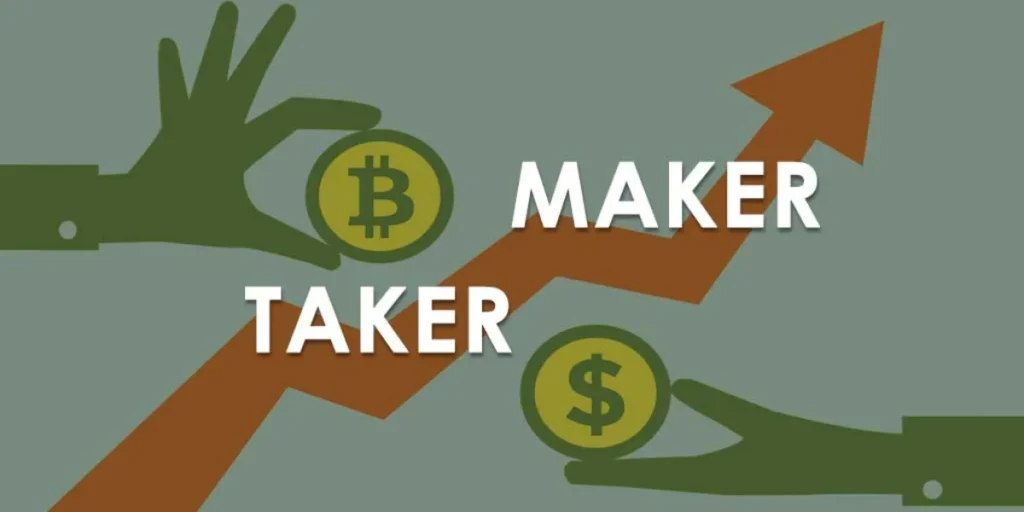
Maker taker fees operate on a unique principle: some traders receive rebates whilst others pay higher costs for the same market activity. This fee structure rewards liquidity providers (makers) with rebates for posting limit orders, whilst charging those who take liquidity (takers) with higher fees. Taker fees are always more expensive because of their immediate demands on the exchange’s resources. Understanding what maker and taker fees are is particularly crucial for traders, as the difference between maker vs taker fees can significantly impact profitability. This article explains the maker and taker fees meaning, compares their costs, and provides strategies to minimise trading expenses across traditional and crypto markets.
What Are Maker and Taker Fees?
Maker Fees Definition and Purpose
A maker fee applies when a trader places an order that adds liquidity to an exchange’s order book without immediate execution. Specifically, these are limit or stop-limit orders set at prices different from the current market price. For example, placing a buy limit order for Bitcoin at £68,000 whilst the current market price stands at £69,500 creates a pending order in the order book. Since this order waits for the market to reach the specified price, the trader provides liquidity by creating new trading opportunities for others.
Exchanges charge lower maker fees because these orders stabilise markets and expand the order book. Some platforms even implement negative maker fees, where the exchange pays rebates to traders who add liquidity. This approach proves especially common in highly competitive futures markets. The downside involves longer wait times, as maker orders only execute when the market hits the set limit price.
Taker Fees Definition and Purpose
A taker fee occurs when a trader removes liquidity by executing an order immediately against existing orders in the order book. Market orders exemplify this behaviour, as they prioritise instant execution at the best available price. When a trader places a market order to buy Bitcoin, the system matches it with the closest available sell orders and removes them from the order book. As a result, the trader consumes existing liquidity and pays the taker fee.
Taker fees exceed maker fees on virtually every exchange because immediate execution demands greater resources and reduces available liquidity. In contrast to makers who create markets, takers function as customers who arrive and purchase immediately. The higher fee compensates for the smooth, rapid processing and covers the cost of depleting the order book.
How Exchanges Use This Fee Structure
The maker-taker model originated in 1997 when Joshua Levine, creator of Island Electronic Communications Network, designed a pricing structure to incentivise trading in markets with narrow spreads. Exchanges adopted this framework to attract professional market makers even before organic retail volume existed. By offering maker rebates funded through taker fees, platforms solve the liquidity problem whilst generating revenue from the spread between fees charged and rebates paid.
Typical maker rebates range from 0.02% to 0.04%, whilst taker fees span 0.03% to 0.06%. High-volume traders receive discounted rates, with some exchanges offering maker rebates as low as negative 0.005%, meaning the platform pays market makers.
Maker vs Taker Fees: Key Differences
The distinctions between maker and taker fees extend beyond simple pricing variations, affecting execution speed, market impact, and risk exposure.
Fee Amounts and Cost Comparison
Makers typically enjoy rates between 0.02% to 0.04%, whilst takers face charges ranging from 0.03% to 0.06%. Bybit charges 0.0200% for maker orders and 0.0550% for taker orders on futures trading. For a trader executing £100,000 in daily volume, choosing maker orders over taker orders saves 4-6 basis points per trade, potentially £400-£600 per day or £100,000-£150,000 annually. The amount of the taker fee exceeds the maker fee across virtually all platforms.
Impact on Order Execution Speed
Takers receive immediate execution as their market orders fill instantly against existing offers. In contrast, maker orders may take hours or days to confirm, depending on whether the market reaches the specified price. A limit order may never fill if the price was set too far from current levels and the asset doesn’t reach that threshold. This speed advantage explains why some traders accept higher taker fees for instant confirmations.
Liquidity Contribution Differences
Makers enhance market depth by posting resting orders that other participants can trade against. Takers consume available liquidity and can widen the bid-ask spread. Every executed transaction involves both sides: the maker whose order was already resting in the order book and the taker whose order executed against it. Exchanges incentivise liquidity provision because deeper order books attract more trading activity and tighter spreads.
Price Control and Slippage Risk
Takers forfeit price certainty because market orders execute at whatever price exists in the order book. They face greater slippage risk, particularly when executing large orders or trading illiquid pairs. Makers specify their exact entry or exit price through limit orders, avoiding unfavourable prices altogether. Since makers add liquidity rather than remove it, they don’t cause gaps in price spreads or experience slippage.
Trying to Time Your Entry Points? Read Our Detailed Breakdown of the Bitcoin 4-Year Cycle.
How Maker Taker Fees Impact Your Trading Profits
Trading costs directly subtract from returns, and maker taker fees compound this effect across every transaction. The total cost per trade encompasses multiple fee layers beyond the headline commission rate.
Calculating Fee Costs on Your Trades
Transaction costs include both explicit costs (commissions, exchange fees) and implicit costs (bid-ask spreads, market impact, slippage). For instance, a trader executing £100,000 in daily volume paying 0.05% taker fees versus 0.02% maker fees accumulates £30 daily in additional costs, translating to approximately £7,500 annually. Professional traders calculate effective spreads including fees rather than nominal rates alone. On cryptocurrency exchanges, the maker-taker model charges different rates depending on order type, with fees calculated as a percentage of total order value at execution.
High-Frequency Trading and Fee Optimisation
High-frequency trading firms exploit maker rebates by buying and selling shares at identical prices to profit from the spread between rebates. Research by University of Notre Dame and Indiana University professors identified stockbrokers regularly channelling client orders to markets providing the best rebate payments, though order execution quality suffered when routing prioritised rebate benefits over price improvement.
Long-Term Portfolio Performance Effects
A stock portfolio earning 8% annually before fees with 1% in fees results in around 7% return after fees. Over decades, this difference translates into substantial reductions in final portfolio value. Every fee paid reduces money available for compounding, affecting not only immediate returns but future growth potential.
Hidden Costs Beyond Stated Fees
Implicit costs often exceed explicit costs for larger or less liquid transactions. Slippage occurs when final execution price differs from expected price, accumulating significance across numerous trades. Market impact, execution delays, and opportunity costs form additional components rarely visible in advertised fee schedules.
Strategies to Minimise Trading Costs
Reducing trading expenses requires strategic adjustments across order types, timing, platform selection, and volume optimisation.
Using Limit Orders to Qualify for Maker Fees
Market orders cross the spread every time, whilst limit orders wait for the market to reach your price. On EUR/USD with a 0.5-pip spread, a market order costs £7.64 per standard lot in spread, whereas a limit order that fills at the bid costs £0.00. Over 100 trades monthly, switching to limit orders saves £764.50 purely from changing order type.
Timing Your Trades for Better Execution
Spreads widen during low-liquidity periods, increasing implicit costs. Trading during high-volume sessions reduces spread costs and improves execution quality. Accordingly, professional traders avoid illiquid hours when bid-ask spreads expand significantly.
Choosing Exchanges with Favourable Fee Structures
Exchange fee structures vary considerably across platforms. For traders below £76,449.51 in monthly volume, certain exchanges offer more competitive rates, whilst at higher volumes (£1.53M+), platforms with zero maker fees become attractive. Independent Reserve offers some of Australia’s lowest rates, particularly for high-volume accounts.
Volume-Based Fee Tier Optimisation
Most exchanges calculate fees based on rolling 30-day trading volume. Kraken’s tiered system ranges from 0.40% maker fees at entry level down to 0.0% for volumes exceeding £15.29M. Likewise, reaching volume thresholds qualifies traders for reduced rates, with some platforms updating tier eligibility hourly.
Related Article: Market Order vs Limit Order: Which is Right for Your Trading Strategy? [2026]
Conclusion – Maker Taker Fees
Maker and taker fees fundamentally shape trading profitability, with takers consistently paying higher costs for immediate execution whilst makers receive rebates for providing liquidity. The difference between these fee structures compounds significantly over time, particularly for high-frequency traders. By prioritising limit orders, selecting exchanges with favourable rates, and optimising trading volume for better tier placement, traders can substantially reduce transaction costs. On the whole, understanding this fee model enables traders to make informed decisions that preserve capital and enhance long-term returns across both traditional and cryptocurrency markets.
What is the difference between maker and taker fees?
Maker fees apply when you place a limit order that adds liquidity to the exchange’s order book, typically ranging from 0.02% to 0.04%. Taker fees are charged when you execute a market order that immediately removes liquidity from the order book, usually costing between 0.03% to 0.06%. Makers receive lower fees (or even rebates) because they provide liquidity, whilst takers pay more for instant execution.
How do maker and taker fees impact my trading profits?
Trading fees directly reduce your returns and compound over time. For example, a trader executing £100,000 in daily volume could save £400-£600 per day by using maker orders instead of taker orders, potentially accumulating £100,000-£150,000 in annual savings. These costs affect not only immediate returns but also long-term portfolio growth through reduced compounding potential.
Can I reduce my trading costs by using limit orders?
Yes, using limit orders instead of market orders can significantly reduce costs. Limit orders qualify for maker fees, which are substantially lower than taker fees. For instance, on EUR/USD with a 0.5-pip spread, switching from market orders to limit orders could save approximately £764.50 over 100 monthly trades purely from the order type change.
Do all exchanges charge the same maker and taker fees?
No, fee structures vary considerably across different exchanges. Some platforms offer maker rebates as low as negative 0.005%, meaning they actually pay market makers. Fee rates also depend on your trading volume, with high-volume traders receiving discounted rates. It’s important to compare exchanges and choose one with favourable fee structures for your trading volume.
How are maker and taker fees calculated on my trades?
Maker and taker fees are calculated as a percentage of your total order value at execution. The specific rate depends on your trading volume tier and the exchange you’re using. Most exchanges calculate fees based on rolling 30-day trading volume, with higher volumes qualifying for reduced rates. Some platforms update tier eligibility hourly based on your recent trading activity.