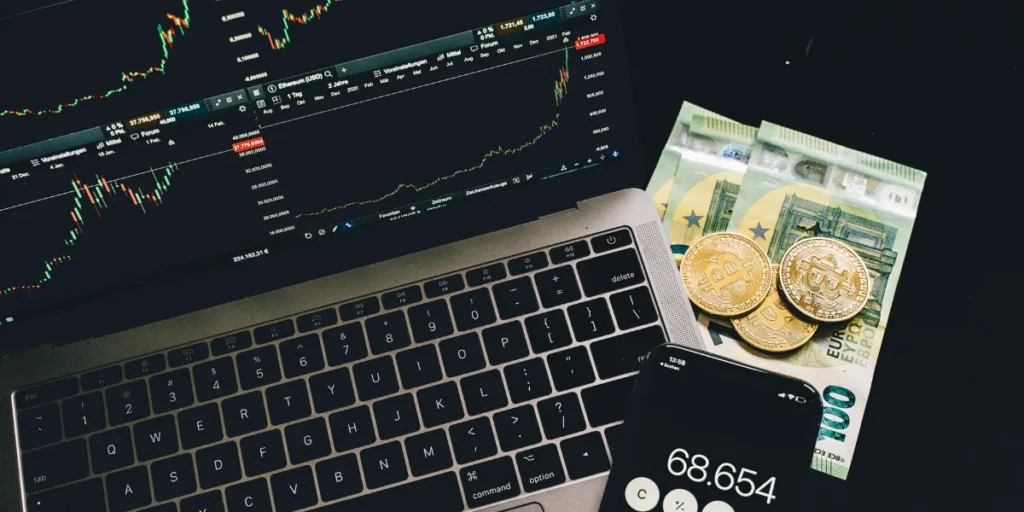
With over 219 million global Bitcoin owners, the cryptocurrency market attracts countless new traders daily. Yet jumping straight into live trading without proper preparation can lead to costly mistakes and financial losses. Paper trading crypto offers a risk-free solution. It’s essentially a practise arena where traders can execute trades, test strategies, and analyse performance using virtual funds in a simulated market environment. The beauty of crypto paper trading lies in its ability to provide hands-on experience without financial risk whilst helping traders understand order types, chart analysis, and market dynamics. This guide will walk readers through mastering paper trading before committing real money to the volatile crypto markets.
“When navigating market volatility, short-term price fluctuations matter far less than understanding Bitcoin’s multi-year market structure and historical expansion periods.”
What Is Crypto Paper Trading?
Paper trading crypto functions as a risk-free simulator that enables traders to execute buy and sell orders with virtual funds at live market prices. Strategies, bots, and manual trades can all be practised without staking actual capital.
How Paper Trading Crypto Works
Platforms pull live price feeds directly from major exchanges such as Binance or Coinbase, streaming real-time order books, volatility spikes, and market depth into simulated accounts. When a market order gets placed or a stop-loss gets set, the system executes it instantly based on current conditions, updating the virtual balance with precision that mirrors actual trading mechanics. Orders aren’t routed to real exchanges; instead, the system simulates order filling based on real-time quotes.
The virtual environment calculates account balance and performance numbers using fake money whilst tracking orders and positions. Some platforms even simulate slippage during high-volume moments or partial fills when liquidity thins. Traders can reset their virtual balance anytime, encouraging experimentation without permanent consequences.
Benefits of Paper Trading Before Investing
Accordingly, crypto paper trading allows strategy development and refinement in a stress-free environment. Traders can practise without risking real capital whilst learning market dynamics. The complete absence of financial risk permits testing of aggressive strategies, exploration of leveraged positions, or experimentation with algorithmic setups that might otherwise drain accounts within minutes.
Given that 90% of traders lose money in their first year, crypto paper trading compresses the learning curve by enabling fast failures, quick adjustments, and strategy iterations until patterns emerge. Beginners who jump into live markets without understanding order execution or risk management often suffer immediate setbacks.
What to Practise in Your Paper Trading Account
Building consistent trading processes matters more than predicting short-term price movements correctly. Accordingly, focus during paper trading should centre on developing repeatable habits rather than chasing winning trades.
Master Order Types and Execution
Market orders execute instantly at prevailing prices but face slippage during volatile periods. Limit orders provide price control yet may never fill if markets move away. Stop-loss orders trigger market sales at predetermined levels to cap losses, whilst stop-limit orders add precision by specifying both trigger and execution prices. Trailing stops dynamically adjust as prices move favourably, locking gains whilst allowing upside. Practise each type in fast-moving crypto markets to understand fill behaviour and execution delays.
Learn Chart Analysis and Market Indicators
Candlestick patterns reveal market psychology through body size and wick length. Volume bars confirm whether price moves carry conviction or represent fragile rallies. Moving averages smooth price data to identify trend direction, with crossovers signalling momentum shifts. The Relative Strength Index oscillates between 0 and 100, flagging overbought conditions above 70 and oversold below 30. MACD tracks momentum through exponential moving average differences. Combine multiple indicators for confluence rather than relying on single signals.
Test Different Trading Strategies
Trend-following captures directional moves using higher highs and higher lows. Mean reversion targets price returns to averages after extended runs. Volatility-based setups adjust position size based on market conditions. Test each across different timeframes and market states.
Practise Spot Trading First
Spot markets involve straightforward ownership without margin complications. Master basic execution before adding leverage complexity.
Experiment with Futures and Leverage Safely
Futures require understanding margin requirements and contract specifications. Leverage amplifies outcomes equally. A 5% adverse move on 10x leverage means 50% capital loss. Practise position sizing and observe how margin fluctuates with volatility before risking real funds.
Preparing for Live Trading
Transitioning from paper trading crypto to live markets demands specific readiness markers beyond virtual profitability.
Know When You’re Ready to Trade Real Money
Consistent profits over multiple months signal preparation, yet consistency differs from winning every trade. Traders ready for live execution demonstrate clear risk management rules they follow without exception, maintain emotional control when positions move against them, and understand their platform’s execution mechanics thoroughly. Research indicates trading success comprises strategy at 10%, money management at 30%, and psychology at 60%.
Start with Small Positions
Begin with capital that could disappear completely without affecting essential expenses, emergency savings, or debt payments. Never use leverage initially. Borrowed money introduces liquidation risk and transforms ordinary price movements into forced losses.
Set Strict Risk Management Rules
Position sizing determines trade amounts based on acceptable loss rather than account percentage alone. Define maximum risk per trade, daily loss limits, weekly drawdown caps, and trading pause conditions before placing orders. Risk 1-2% per trade as a starting framework, though individual circumstances vary.
Track Your Psychological Responses
Record emotional states before, during, and after each trade in a journal. Document fear triggers, moments of greed, and instances where emotions overrode analysis. This practise reveals behavioural patterns that paper trading cannot expose, enabling traders to recognise when anxiety or overconfidence influences decisions.
Related Article: Understanding What is Risk to Reward Ratio: Your Essential Guide to Smarter Trading Decisions
Conclusion – Paper Trading Crypto
Paper trading crypto offers the perfect training ground for aspiring traders. By practising with virtual funds, traders can master order execution, test strategies, and build emotional discipline without financial risk. Given that most beginners lose money in their first year, this preparation proves invaluable. Start with a reliable platform, focus on consistent processes rather than quick wins, and transition to live markets only when demonstrating clear risk management and emotional control. Practise makes prepared, not perfect.
You May Also Be Interested In: Backtesting vs Paper Trading: How to Validate Trading Strategies Safely
Should I start with paper trading or use real money straight away?
Most successful traders recommend beginning with paper trading to learn platform mechanics, order execution, and basic strategy without financial risk. However, paper trading lacks the psychological pressure of real money. The ideal approach is to paper trade until you understand the fundamentals, then transition to live trading with very small amounts—perhaps £100-£200—to experience real emotions whilst limiting potential losses.
What’s the main difference between paper trading and live trading?
The primary difference is psychological. Paper trading uses virtual funds with no real financial consequences, allowing unlimited experimentation without emotional pressure. Live trading involves actual capital, real slippage, potential execution delays, and the psychological weight of genuine profit and loss. Whilst both use identical live market prices, paper trading cannot replicate the fear and greed that influence real trading decisions.
How long should I paper trade before switching to real money?
There’s no fixed timeframe, but consistency matters more than duration. You should paper trade until you demonstrate consistent profitability over at least three months, follow your risk management rules without exception, and understand your platform thoroughly. Some traders paper trade for six months, whilst others move to small live positions sooner to begin learning emotional control with minimal risk.
Can paper trading actually teach me to be profitable?
Paper trading teaches technical skills like chart analysis, order types, and strategy testing, but it cannot fully prepare you for the emotional challenges of live trading. If you cannot be profitable in simulation, you certainly won’t succeed with real money. However, paper trading success doesn’t guarantee live trading success due to the psychological differences. It’s best viewed as a necessary first step rather than complete preparation.