A plan that survives five years of historical analysis can fall apart within its first live month, highlighting a critical question in the backtesting vs paper trading debate. Backtesting allows traders to simulate years of trading data rapidly using historical market data, whilst paper trading enables them to test strategies under real-time market conditions without incurring financial losses. Both methods serve distinct purposes in validating trading strategies, yet many traders struggle to understand when and how to use each effectively. This guide explores what backtesting a trading strategy is and how it compares to paper trading. By understanding the key differences in paper trading vs backtesting, traders can build a comprehensive validation process that safely prepares them for live trading.
What is Backtesting a Trading Strategy?
Backtesting assesses the viability of a trading strategy by applying it to historical market data without risking actual capital. This method simulates how a strategy would have performed in past market conditions, providing insights into potential future performance. The underlying principle assumes that strategies that produce favourable results on historical data are likely to perform well under similar future conditions, although markets remain inherently unpredictable.
How Backtesting Works
The backtesting process involves gathering relevant historical data and applying predefined strategy rules to simulate trades. Traders define exact entry and exit points, position sizes, stop-loss levels, and risk management parameters. The system then replays these rules against past price movements, recording all valid trades, including both winners and losers. Investors evaluate key performance metrics such as win rate, profit factor, maximum drawdown, and risk-adjusted returns to assess strategy effectiveness. This analysis reveals whether to refine, adjust, or abandon the approach before risking real money.
Benefits of Backtesting
Backtesting offers a risk-free environment to experiment with new strategies without financial exposure. It acts as a mirror for strategies, revealing strengths and weaknesses across different market conditions. Traders can fine-tune parameters in this laboratory-like setting, optimising performance by testing variables such as stop-loss levels and entry configurations. The process provides evidence-based insights beyond gut feelings, enabling data-driven decisions backed by statistical proof. Additionally, backtesting builds confidence in strategies, as seeing positive historical performance helps traders maintain discipline during volatile market periods and avoid impulsive strategy switching during losing streaks.
When to Use Backtesting
Backtesting proves particularly useful in algorithmic trading, where complex computer programmes execute trades automatically based on predefined rules. Institutional investors and hedge funds frequently employ backtesting to validate proprietary trading strategies, whilst mutual funds conduct portfolio backtests to simulate investment approaches. Traders should use backtesting when comparing multiple strategies under identical historical conditions, allocating capital more effectively, or assessing how well a strategy manages risk through drawdown analysis and risk-adjusted return calculations.
Common Backtesting Mistakes
Lookahead bias occurs when traders unconsciously use information unavailable during real-time trading, such as adjusting entry points based on hindsight knowledge of future price movements. Overfitting represents another critical pitfall, where strategies become excessively optimised to historical data, performing well on past information but struggling in live markets due to overly specific parameters. Survivorship bias inflates results by testing only on assets that exist currently, ignoring delisted or bankrupt companies. Traders must also account for transaction costs, commissions, slippage, and spread costs, as neglecting these expenses can transform apparently profitable strategies into loss-making ones.
Related Article: Fintech Explained: How Technology Is Reshaping Money, Banking, and Payments
What is Paper Trading?
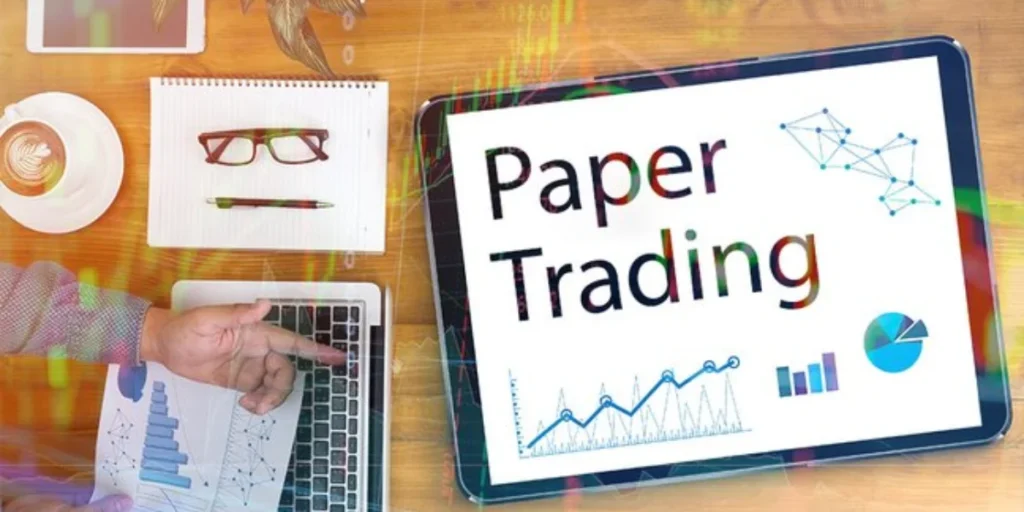
Paper trading provides a simulated market environment where traders execute buy and sell decisions without deploying actual capital. The term originates from a time before computers when aspiring traders recorded hypothetical positions on paper. Modern platforms replace manual tracking with digital simulators that replicate real trading platforms, allowing participants to test strategies with virtual funds whilst observing genuine market movements.
How Paper Trading Works
Traders open demo accounts that mirror live trading platforms, receiving preset virtual balances to practise with. Common starting amounts range from £10,000 to £100,000 in simulated funds. The platform provides real-time or slightly delayed market data, enabling users to analyse charts, place orders, and manage positions identically to live trading. Systems track complete trading histories, recording entry and exit points, market conditions, and outcomes for later review. Participants can reset virtual accounts regardless of gains or losses, offering unlimited practise opportunities.
Benefits of Paper Trading
Paper trading eliminates financial risk whilst allowing traders to make mistakes and learn from them without depleting savings. New traders gain familiarity with order types, platform features, and market mechanics in a relaxed environment where incorrect keystrokes won’t trigger financial disasters. The method builds confidence through practise, helping traders manage knee-jerk reactions before facing actual high-stakes situations. Experienced traders use simulators to refine existing strategies or test new approaches, recognising that market conditions change and techniques require periodic adjustment. Unlike backtesting, paper trading reveals how strategies handle current conditions rather than historical scenarios.
When to Use Paper Trading
Beginners should use paper trading to learn market fundamentals and develop discipline before risking capital. Experienced traders benefit when exploring unfamiliar markets, testing modified strategies, or switching between trading styles such as moving from fundamental to technical analysis. Institutional traders employ paper trading when developing new strategies, ensuring approaches function properly before deployment.
Paper Trading vs Backtesting: Key Differences
Understanding the distinctions between these two validation methods helps traders select the appropriate approach for different stages of strategy development.
Time and Speed of Results
Backtesting processes years of market data within minutes, allowing traders to evaluate thousands of potential trades rapidly. A strategy requiring months to validate through paper trading can be assessed across multiple market cycles almost instantly through historical simulation. Conversely, paper trading operates in real-time, matching actual market speed at a 1:1 ratio. Testing a strategy thoroughly may require weeks or months of continuous observation, consuming valuable time that could be spent on actual trading.
Data Sources and Accuracy
Backtesting relies exclusively on historical datasets, which provide a true reflexion of past market behaviour but cannot guarantee future performance. Paper trading employs live market feeds, utilising actual price data and order books to mirror current trading environments. This real-time data reveals how strategies respond to present conditions rather than historical scenarios, capturing market dynamics that historical records cannot replicate.
Testing Environment
Backtesting typically assumes perfect execution at exact historical prices without slippage or partial fills. This idealised environment often produces smoother results than reality permits. Paper trading introduces realistic execution timing and may expose latency issues hidden during backtesting. However, simulated fills remain optimistic, usually executing at quoted prices without accounting for market impact.
Emotional Involvement
Backtesting eliminates psychological factors entirely, as stress and emotional reactions cannot exist when reviewing historical data. Paper trading generates partial emotional engagement, allowing traders to experience drawdowns in real-time despite using virtual funds. This psychological pressure helps identify whether traders can maintain discipline during losses, even without actual capital at risk.
Cost and Resources
Both methods offer low-cost validation options. Backtesting requires historical data access and potential software costs, whilst paper trading needs only platform access with simulated accounts, typically provided free by brokers.
How to Use Both Methods to Validate Strategies Safely
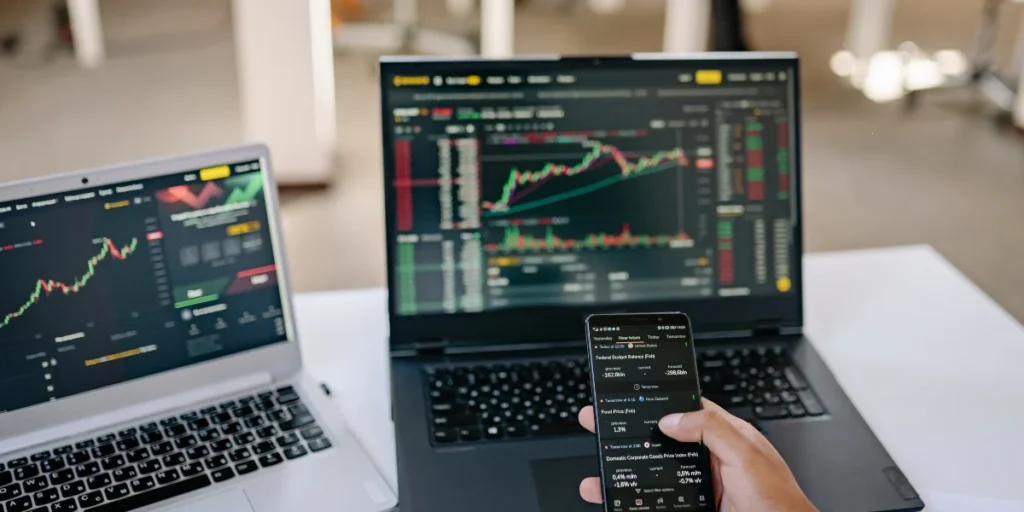
Professional traders combine both validation methods sequentially rather than choosing between paper trading vs backtesting, creating a systematic pathway from theory to execution.
Start with Backtesting First
Build strategies with clear entry and exit rules, then backtest across multiple years of data. Check whether the strategy produces acceptable returns, manageable drawdowns, and realistic trade frequency for the available schedule. A Profit Factor above 1.5 indicates a workable edge. This initial validation proves the strategy worked historically before investing time in real-time testing.
Move to Paper Trading Second
Following successful backtesting, paper trade for at least 2 to 4 weeks. Execute every signal without skipping trades or overriding stops. Treat simulated funds as real capital. This forward testing reveals execution gaps, psychological pressure, and operational issues that backtesting cannot capture.
Interpret Results from Both Methods
Compare paper trading outcomes against backtest metrics. Assess whether fills remain similar and win rates align closely. Significant divergence indicates execution problems rather than strategy flaws. Paper trading exposes slippage, latency, and timing challenges hidden in historical simulations.
When to Transition to Live Trading
Begin live trading with minimal position sizes. Scale gradually, using 25% of target size in month one, 50% in month two, and reaching full size only after consistent results. Real capital changes psychology, for this reason starting small proves the ability to execute with actual stakes before increasing exposure.
Conclusion – Backtesting vs Paper Trading
The debate between paper trading vs backtesting shouldn’t force traders into choosing one method exclusively. Backtesting provides rapid historical validation, whilst paper trading exposes execution realities in current markets. By the same token, combining both approaches creates a comprehensive validation process that addresses different aspects of strategy development. Traders who test historically first, then validate in real-time simulations, and finally transition gradually to live markets position themselves for sustainable success whilst minimising unnecessary risks.
Does backtesting guarantee that a trading strategy will be successful in live markets?
Backtesting does not guarantee future success, as markets constantly evolve and past performance doesn’t ensure future results. However, it provides valuable evidence-based insights into how a strategy performed historically across different market conditions. Whilst backtesting cannot predict future outcomes with certainty, it helps identify potential flaws and strengths before risking real capital, making it an essential validation step rather than a definitive predictor of success.
What’s the main difference between paper trading and backtesting?
The primary difference lies in timing and data sources. Backtesting analyses historical market data and can process years of information within minutes, whilst paper trading operates in real-time using current market conditions. Backtesting provides rapid validation across multiple market cycles, whereas paper trading reveals how strategies perform in present-day conditions and exposes execution challenges that historical simulations cannot capture, such as slippage and timing issues.
Should I use backtesting or paper trading first when developing a strategy?
Start with backtesting first to quickly determine if your strategy has historical viability before investing time in real-time testing. Once backtesting shows acceptable results, move to paper trading for at least 2-4 weeks to validate the strategy in current market conditions. This sequential approach allows you to eliminate fundamentally flawed strategies rapidly through backtesting, then confirm execution feasibility through paper trading before risking actual capital.
Can paper trading accurately simulate the emotional aspects of real trading?
Paper trading generates partial emotional engagement by allowing you to experience drawdowns and decision-making in real-time, even though no actual money is at risk. Whilst it cannot fully replicate the psychological pressure of trading with real capital, it helps identify whether you can maintain discipline during losses and follow your strategy rules consistently, making it more emotionally realistic than backtesting, which eliminates psychological factors entirely.
What are common mistakes to avoid when backtesting a trading strategy?
Common backtesting errors include lookahead bias (using information unavailable during actual trading), overfitting (optimising excessively to historical data), and survivorship bias (testing only currently existing assets). Additionally, many traders neglect to account for transaction costs, commissions, slippage, and spreads, which can transform apparently profitable strategies into loss-making ones. Avoiding these pitfalls requires careful attention to realistic execution assumptions and proper data handling.