
The ETF funds vs index funds debate often comes down to accessibility and flexibility, with ETFs starting at as little as $500 whilst some index funds require minimums ranging up to $500,000. Both investment vehicles offer low-cost options for gaining broad market exposure, yet they operate quite differently in practise. ETFs trade throughout the day like stocks, whilst index funds are priced only once daily after market close.
Furthermore, the difference between ETFs and index funds extends to tax efficiency, settlement times, and ongoing costs. Understanding what is an ETF versus how index funds operate is essential for making an informed choice. This guide breaks down the key distinctions in the ETF vs index fund comparison, explores ATO tax implications, and helps investors determine which option suits their goals.
What Are ETFs and Index Funds?
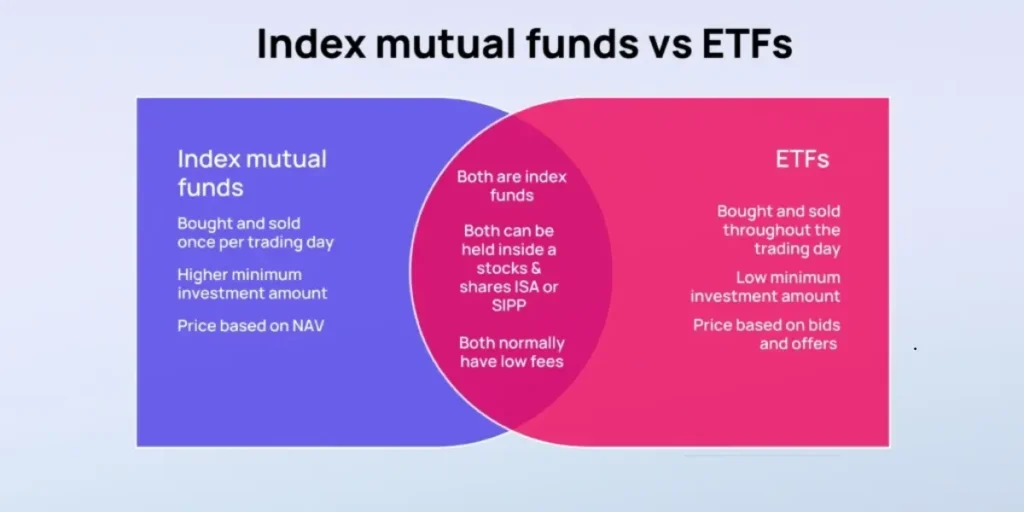
Both ETFs and index funds serve as investment vehicles designed to track market benchmarks, yet their structural differences create distinct experiences for investors. Understanding what is an ETF and index fund requires examining how each product functions within financial markets.
What Is an ETF?
An exchange-traded fund (ETF) represents a type of investment fund that trades on stock exchanges throughout market hours. ETFs hold financial assets including stocks, bonds, currencies, commodities, futures contracts, and even cryptocurrency. Most equity and fixed-income ETFs function as index funds, using passive management to replicate the performance of stock market or bond market indices.
These indices range from broad-based benchmarks like the S&P 500 to sector-specific indices tracking technology or financial industries. ETFs can be bought and sold on exchanges similar to individual stocks, with prices fluctuating continuously during trading hours. Unlike managed funds priced once daily after market close, ETFs provide real-time pricing.
Transparency distinguishes ETFs from other investment products. ETFs typically offer daily portfolio holding disclosures, allowing investors to see exactly what assets the fund contains.
What Is an Index Fund?
An index fund operates as a mutual fund with the goal of replicating the performance of a stock market or bond market index before fees and expenses. Index funds remain unlisted, requiring investors to apply or deal directly with fund managers or financial advisers to buy or redeem units.
These funds use passive management, mirroring an index without stock picking. Index mutual funds release details on specific investments monthly or quarterly, in contrast to the daily transparency of ETFs. The objective centres on minimising tracking error and investment costs rather than generating excess returns through security selection.
How They Track Market Indices
Both investment types employ passive strategies to match index performance. According to Fidelity analysis of Bloomberg data, slightly over 40% of all ETFs are passively managed, meaning assets within the fund simply imitate the index being tracked.
Index funds take different approaches to tracking. Some invest in all securities included in a market index, whilst others invest in only a representative sample. Certain funds use derivatives like futures contracts, options, and swaps to track underlying assets for all or portions of their portfolios. The portfolios change substantially only when benchmark indexes change, with managers periodically rebalancing weights and components to stay matched with target indices.
Key Differences Between ETF and Index Fund
Trading mechanisms separate these investment options in ways that affect daily investor experience. The difference between ETF and index fund becomes apparent when examining operational features.
Trading Flexibility and Market Hours
ETFs trade throughout market hours on stock exchanges, allowing investors to buy and sell at real-time prices based on supply and demand. Index funds can only be purchased and sold at the end of each trading day, with prices determined by the fund’s net asset value (NAV) calculated after market close. This distinction means ETF investors can react to market movements during the day, whilst index fund investors receive the same end-of-day price regardless of when they submit their order.
Minimum Investment Requirements
An ETF investment on the Australian Securities Exchange can start with as little as AUD 764.50 plus brokerage costs. In contrast, index fund investment minimums range from AUD 1,528.99 to AUD 764,495.12, making some products virtually inaccessible for retail investors. ETFs allow purchase of single shares without minimum requirements beyond share price.
Settlement Times and Accessing Your Money
ETF trades settle two business days after transaction (T+2), with money transfers usually taking one additional business day. Index fund redemptions require 7-10 business days or more to access cash.
Paperwork and Administrative Requirements
Once an online investment platform account is established, investors can trade any ETF without providing personal details and banking information for each transaction. Index funds may require printed and submitted forms for every request.
ATO Tax Implications: ETFs vs Index Funds

Tax treatment differs minimally between ETFs and index funds when held on capital account, yet structural variations create efficiency advantages.
Capital Gains Tax Treatment
Investors declare capital gains or losses when selling or disposing of ETF units or index fund units. CGT applies whether through selling, gifting, transferring to a spouse, or liquidation. Holding units for at least 12 months qualifies for a 50% CGT discount on capital gains, with only half the net gain included in assessable income. Capital losses offset current or future capital gains but cannot reduce other income types.
Tax on Distributions and Dividends
Both vehicles require declaration of distributions as income, even when automatically reinvested. Franking credits from Australian companies flow through to investors, reducing tax liability. Distribution statements detail taxable components including dividends, interest, and realised capital gains.
Tax Efficiency in Fund Redemptions
ETFs demonstrate superior tax efficiency through in-kind creation and redemption mechanisms. When investors redeem index fund units, managers sell securities to raise cash, potentially triggering capital gains distributed to all remaining shareholders. ETF redemptions occur on exchanges between investors, avoiding portfolio liquidations. In 2025, just 7% of ETFs distributed capital gains compared to 52% of mutual funds.
Reporting Requirements to the ATO
Investors must keep records for 5 years after the ATO processes tax returns. Required documentation includes purchase dates, prices, brokerage costs, distribution statements, and details of CGT events like unit splits or mergers.
Which Is Better: ETFs vs Index Funds?
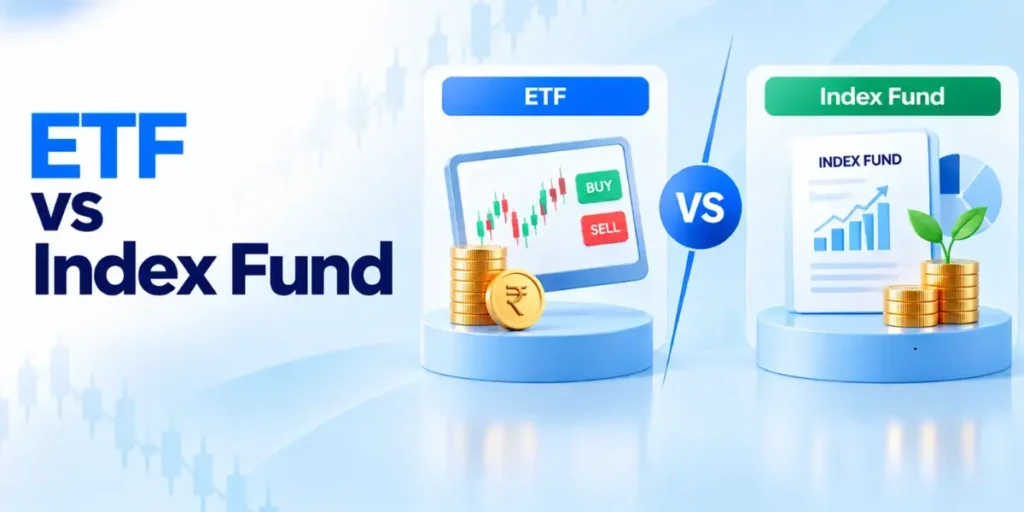
Selecting between these investment vehicles depends on trading habits, time horizons, and cost sensitivity rather than performance potential.
Best for Active Traders and Flexibility
ETFs deliver greater value for investors who trade frequently or require intraday liquidity. The ability to buy and sell throughout trading hours using limit orders, stop-loss orders, and stop-limit orders provides control unavailable with index funds. Correspondingly, real-time pricing allows capitalisation on short-term market fluctuations. Investors needing quick cash access benefit from T+2 settlement.
Best for Long-Term Set-and-Forget Investors
Index funds suit investors preferring automatic monthly contributions without concern for intraday volatility. The seamless dividend reinvestment process requires merely checking a box, whilst ETF investors face slightly more complex reinvestment procedures. Long-term holders avoid transaction costs associated with frequent trading.
Cost Comparison Over Time
Index mutual funds averaged 0.05% expense ratios in 2025, whilst index equity ETFs averaged 0.14%. Particularly for ETF investors, bid-ask spreads add costs beyond expense ratios, with wider spreads on low-volume ETFs. Over extended periods, lower expense ratios potentially improve net returns.
Liquidity and Portfolio Management Needs
Index funds eliminate liquidity concerns through direct AMC redemptions. ETF liquidity depends on market makers and trading volumes, with investors potentially forced to sell at lower prices during certain market conditions. High average daily trading volumes indicate superior ETF liquidity.
Conclusion – ETF Funds vs Index Funds
The ETF vs index fund debate doesn’t have a universal winner. ETFs excel for investors wanting flexibility, lower entry points, and tax efficiency, whilst index funds suit those preferring automatic contributions and simplified administration.
For active traders or those with smaller capital, ETFs present clear advantages. Long-term investors focused on consistent accumulation may find index funds equally effective. Ultimately, both vehicles deliver low-cost market exposure. The better choice depends on individual trading frequency, investment timeframe, and preferred management style rather than performance potential.
Are ETFs more tax-efficient than index funds?
ETFs generally offer slightly better tax efficiency due to their unique creation and redemption mechanism, which allows them to avoid triggering capital gains when investors exit. However, for broad-market index funds with positive cash flows, the difference is minimal—typically around 0.05-0.07% annually. The tax advantage becomes more significant during market downturns when mutual funds may be forced to sell holdings to meet redemptions, potentially distributing capital gains to remaining investors.
Can I automatically invest in ETFs like I can with index funds?
Yes, many brokerages now offer automatic investment plans for ETFs. Platforms like Fidelity and Vanguard allow you to set up recurring purchases of ETFs with fractional shares, similar to traditional index fund automatic investments. The purchases typically execute at a set time during market hours rather than at end-of-day pricing like mutual funds.
What are the minimum investment requirements for ETF funds vs index funds?
ETFs have much lower entry barriers, with investments starting from the price of a single share (often as low as AUD 500-800) plus brokerage fees. Index funds typically require higher minimums, ranging from approximately AUD 1,500 to AUD 500,000 depending on the fund, making ETFs more accessible for beginning investors or those with limited capital.
How quickly can I access my money when selling ETFs compared to index funds?
ETF sales settle in two business days (T+2), with funds typically available in your account within three business days total. Index fund redemptions take considerably longer, usually requiring 7-10 business days or more before you can access your cash, making ETFs the better choice if you need quick liquidity.