Learning how to invest in index funds might seem daunting, but it’s surprisingly straightforward for beginners. Index funds are one of the most popular ways to access a diversified set of assets in one position, offering lower risk since all the ‘eggs’ aren’t in one ‘basket’. In fact, they’re considered a lower-cost alternative to investing in individual stocks or bonds. For Australians wondering what are index funds or how to buy index funds, this guide breaks down everything step-by-step, from opening an account to managing a portfolio effectively.
What Are Index Funds?
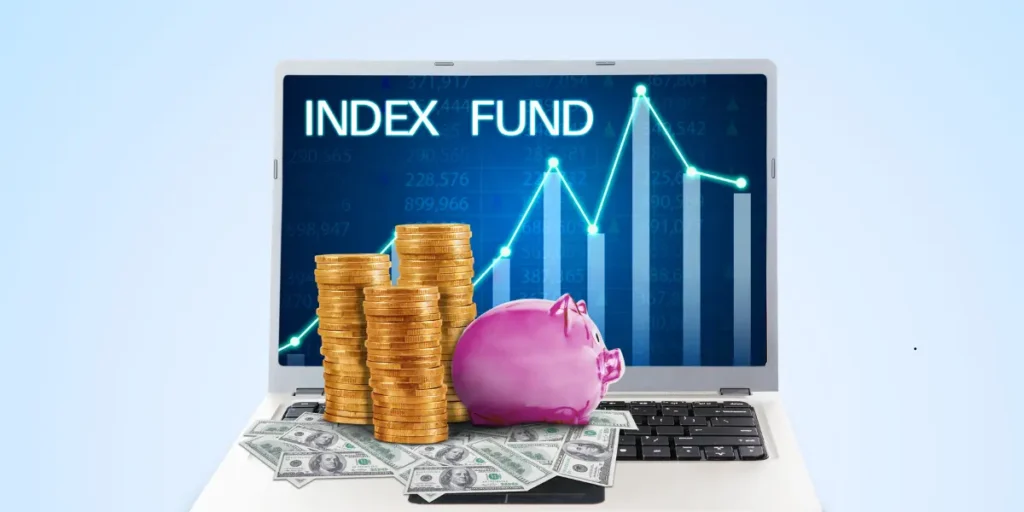
An index fund is a mutual fund or exchange-traded fund (ETF) designed to replicate the performance of a specific market index by holding the same securities in identical proportions. Rather than relying on active stock selection, these funds use passive management to mirror an index, tracking benchmarks like the S&P 500 or ASX 200. Because they don’t involve active oversight in deciding which stocks to buy and sell, the holdings automatically track an index, matching the same stock allocation.
Types of Index Funds Available
Index funds come in several varieties, each tracking different market segments. Stock index funds track broad market indexes and suit long-term growth strategies. Bond index funds focus on government, corporate, and municipal bonds, providing regular income and stability. Sector-specific index funds concentrate on particular industries like technology or healthcare, offering thematic exposure with higher risk. International index funds track developed or emerging markets outside Australia, whilst small-cap and mid-cap index funds focus on smaller companies with higher growth potential. Dividend index funds track companies with consistent dividend payment histories, and environmental, social, and governance (ESG) index funds focus on companies with strong ethical practises.
How Index Funds Track Market Performance
Index funds track their benchmarks through specific methodologies. Some invest in all securities included in a market index, whilst others invest in only a representative sample. Many indexes use market capitalisation weighting, where companies with higher market values carry more weight and have greater influence on fund performance. The portfolios only change substantially when their benchmark indexes change. Fund managers periodically rebalance the weights and components to stay matched with the target index. Some funds may also use derivatives like options or futures to achieve their investment objective.
Index Funds vs Managed Funds
The fundamental difference lies in their management approach. Index funds build portfolios to mimic an index, with holdings mirroring the securities and weightings of the relevant benchmark. Managed funds, in contrast, rely on investment managers who actively select stocks, bonds, and securities based on research, aiming to outperform benchmarks. This active approach requires regular investment decisions, making managed funds more expensive.
Performance data reveals a striking pattern. In Australia, 58% of active equity funds returned below the index over one year ending June 2021. Over longer periods, 81%, 78%, and 83% of funds failed to beat the benchmark over 5-, 10-, and 15-year horizons respectively. Similarly, over the past decade, only 21% of active stock fund managers outperformed their benchmarks.
Index funds generally have much lower fees compared to active investments. They distribute fewer taxable capital gains because portfolio managers trade less frequently. However, index investing doesn’t screen shares, meaning exposure to both strong and weak companies without exclusions based on environmental, social, or governance criteria.
Why Index Funds Are Popular in Australia
Index funds have experienced remarkable growth. In the U.S., passive index funds accounted for just 21% of the equity fund market in 2021. By 2023, they had grown to about half of all fund assets. As of May 2026, there was AUD 33.64 trillion invested in index funds in the U.S..
Australian investors access index funds through ASX-listed ETFs or unlisted managed funds. Popular options include Vanguard Australian Shares Index ETF (VAS), iShares Core S&P/ASX 200 ETF (IOZ), and Betashares Australia 200 ETF (A200) for local exposure. Their appeal stems from lower costs, transparency about holdings and fees, and accessibility through broker platforms during market hours.
Benefits and Risks of Investing in Index Funds
Understanding both sides of index fund investing helps beginners make informed decisions about portfolio construction. Whilst these funds offer compelling advantages, they also present limitations worth considering before committing capital.
Key Advantages for Beginners
Index funds deliver several benefits that make them particularly suitable for those learning how to invest in index funds. The cost advantage stands out immediately. Many index funds charge less than 0.15% in fees, whilst actively managed funds often levy 1% or more. On a $152,899.02 investment over 30 years with 8% annual returns, the difference between a 0.10% and 1.00% expense ratio amounts to roughly $336,377.85 in saved fees.
Tax efficiency represents another significant benefit. Because these funds maintain low turnover, buying and selling only when the index composition changes, they generate fewer taxable events and lower capital gains distributions. This characteristic helps investors keep more of their returns.
Diversification happens automatically. A single index fund provides exposure across hundreds or thousands of securities, spreading investments across various industries, sectors, and geographies. This broad exposure reduces the impact of any single security’s poor performance on the overall portfolio.
Performance data supports the passive approach. Academic studies demonstrate that 79% of actively managed funds underperformed the S&P 500 over five years, rising to 88% over 15 years. Transparency adds further appeal, as investors always know exactly what they own since funds simply track published indexes.
Potential Drawbacks to Consider
On the other hand, index funds carry inherent limitations. They’re designed to match market performance, not beat it. During market downturns, these funds naturally decline along with their underlying index, and managers cannot take defensive positions or hedge during periods of market turbulence.
The passive nature creates inflexibility. Funds must hold securities in proportion to index weightings regardless of individual company merits. For instance, in 2026, seven major tech companies make up roughly a third of the S&P 500, meaning any downturn in that sector creates problems for investors. This concentration can lead to overexposure to overvalued sectors or companies.
Investors sacrifice control over fund composition. Some find it frustrating not being able to remove investments they don’t like. Equally important, tracking error can occur when fund performance doesn’t align perfectly with its target index. Investment minimums may also restrict access for some beginners, though many funds now offer low entry points.
Understanding Market Risk
Market risk affects all index fund investors. Asset prices can rise and fall rapidly, with values potentially fluctuating by 50% or more in a year. Index funds hold underlying investments in good times and bad, as long as the tracked index doesn’t change.
General market risk varies by sector. Mining sector indices typically experience more volatility than industrial sector indices. Because index funds follow supply and demand economics, increased popularity can drive up the basket of stocks in an index beyond other stocks. Any subsequent downturn could have larger-than-ideal effects, particularly if concentrated in the largest stocks by market capitalisation.
How to Choose the Right Index Fund

Selecting an appropriate index fund requires evaluating several critical factors beyond simply picking the lowest-cost option. Fees represent just one consideration, particularly as costs have compressed across the industry. When expense ratio differences narrow, other elements become more significant in determining which fund best suits individual circumstances.
Identify the Index You Want to Track
The first step involves determining which market segment aligns with investment priorities. Stock index funds track equity markets like the ASX, whilst bond index funds follow fixed income benchmarks such as the US Treasury Index. Balanced index funds combine both stock and bond exposure, and market cap index funds weight holdings by company size, as seen with the S&P 500. Equal weight index funds distribute assets evenly across all holdings, and international index funds provide exposure to global markets including the Nasdaq, Hang Seng, and FTSE. Sector-based options concentrate on specific industries like technology or commodities. Investors need not limit themselves to a single type; diversifying across multiple index categories spreads risk further.
Compare Fees and Expense Ratios
Expense ratios directly reduce returns over time. A fund with a 1% expense ratio costs $152.90 in the first year on a $15,289.90 investment, with dollar amounts increasing as the portfolio grows. Over extended periods, this compounds into thousands in lost returns. Even small differences matter considerably. Low-cost equity ETFs typically carry expense ratios of 0.25% or less, whilst low-cost equity mutual funds range around 0.5% or lower. Bond ETFs often sit under 0.2%, compared to 0.4% or lower for bond mutual funds. Some funds report both gross and net expense ratios when fee waivers apply, though these waivers can expire without investor notification.
Check Fund Size and Liquidity
Fund size influences operational efficiency and viability. Larger funds benefit from economies of scale, reducing administrative costs as a proportion of assets. They generate greater revenue streams, allowing investment in process improvements and attracting additional inflows through marketing. Larger ETFs generally demonstrate superior tracking errors and higher trading volumes, leading to better price discovery and liquidity. Higher volumes enable investors to buy and sell more efficiently. However, size doesn’t guarantee outperformance in terms of returns. Smaller funds still contribute by offering innovative options in under-tapped market niches and unique thematic strategies.
Review the Fund’s Track Record
Whilst past performance doesn’t guarantee future results, it reveals how funds have navigated different market conditions. Tracking error measures how closely returns match the underlying index. Large or erratic differences suggest inefficiencies, potentially from poor management, high transaction costs, or inefficient cash flow handling. Significant underperformance may indicate elevated costs or operational problems. Look for consistent performance across multiple years rather than short-term fluctuations.
Consider Your Investment Goals
Fund selection depends on financial objectives, investment timeline, and risk tolerance. Aligning choices with broader goals ensures the strategy supports intended outcomes. Risk-averse investors might prefer bond index funds with lower volatility, accepting reduced returns, whilst others may opt for commodity exposure without physically holding underlying assets.
Assess the Fund Provider
Provider reputation and experience matter significantly. Reputable firms offer operational excellence and maintain commitment to low costs and accurate tracking. Established providers give investors confidence in long-term fund management. Before investing, review all available fund information, including the prospectus and recent shareholder reports. Portfolio holdings appear quarterly in regulatory filings.
Step-by-Step Guide: How to Buy Index Funds in Australia
The process requires accessing ETFs or managed funds through established Australian platforms. Each step builds on the previous one, creating a clear path from account setup to active investment.
Step 1: Open a Share Trading or Investment Account
Opening an account with an online broker or investment platform provides access to index funds listed on the ASX. Popular options include CommSec, SelfWealth, Stake, Pearler, and CMC Markets Invest. Registration typically involves providing government-issued identification, Tax File Number, and bank account details. Some platforms offer micro-investing apps like Raiz, CommSec Pocket, and Spaceship for smaller initial investments. Account approval usually takes less than 15 minutes, though identity verification can extend to two business days.
Step 2: Research Available Index Funds
After account approval, identify specific index funds matching investment objectives. Australian equity options include VAS, A200, and IOZ, whilst global exposure comes through VGS, IWLD, and BGBL. Multi-asset diversified funds like VDHG combine multiple asset classes. Review each fund’s management expense ratio, underlying index, liquidity, fund size, and provider reputation before committing.
Step 3: Decide How Much to Invest
Minimum first trades vary by platform. CommSec requires AUD 764.50 for initial purchases on the ASX. Subsequent trades can be smaller depending on holdings and broker requirements. Transfer funds to the brokerage account via bank transfer, BPAY, or direct debit. Settlement occurs two business days after the trade date.
Step 4: Place Your Buy Order
Search for the selected fund using its ticker symbol, then choose between market orders for immediate execution at current prices or limit orders to specify a maximum purchase price. Enter the number of units and confirm the purchase. The platform debits the settlement account two business days afterward.
Step 5: Set Up Your Dividend Strategy
Decide whether dividends should be paid into the account as cash or reinvested automatically. Reinvesting dividends purchases additional shares, enabling compounding growth where earnings generate further earnings. Most platforms offer dividend reinvestment plans at no additional cost.
Managing and Monitoring Your Index Fund Portfolio
Successful investing extends beyond the initial purchase. Regular monitoring ensures the portfolio remains aligned with financial goals and risk tolerance.
Track Your Investment Performance
Monitor performance regularly and consider setting up recurring investments to build the portfolio over time. Review holdings periodically, typically every six to 12 months. Compare actual returns against the required rate of return rather than fixating on short-term market movements. Track annualised total performance, including dividends and brokerage fees, to understand true returns. Portfolio tracking software provides automatic updates and accurate performance visualisation.
When to Rebalance Your Portfolio
Rebalancing involves adjusting asset allocation when preferred weightings shift. For many investors, implementing an annual rebalance proves optimal. Alternatively, rebalance when allocations drift beyond five percentage points from target weights. Markets naturally cause portfolios to become over- or underweighted in certain assets. Direct new contributions to underweighted asset classes rather than selling existing positions. Threshold approaches actively monitor portfolios and trigger rebalancing once allocations stray beyond predefined distances.
Tax Considerations for Index Fund Investors
Capital gains tax applies when selling ETF units for profit. Holding units for at least 12 months qualifies for a 50% CGT discount. Distributions received, including reinvested amounts, must be declared in tax returns. ETFs provide annual AMMA statements outlining income attribution and cost base adjustments. Franking credits from Australian companies reduce overall tax liability.
Conclusion – How to Invest in Index Funds
Index funds offer Australian investors an accessible entry point into the sharemarket with lower costs and built-in diversification. The process is genuinely straightforward: choose funds that align with investment goals, open a brokerage account, and make that first purchase.
Certainly, success requires more than a one-time investment. Regular monitoring, periodic rebalancing, and consistent contributions build wealth over time. Market fluctuations will test patience, but staying focused on long-term objectives yields results.
Right now, investors have everything needed to start building an index fund portfolio. The key lies in taking that first step and maintaining consistency. Start small if necessary, but start today. Index fund investing rewards patience and discipline above all else.
You May Also Be Interested In: How to Create a Crypto Index Fund Using Automation: A Step-by-Step Guide
What would happen if I invested AUD 152.90 monthly in the S&P 500?
Regular monthly investments of AUD 152.90 in an S&P 500 index fund would allow you to benefit from compound growth over time, where your earnings generate further earnings. The actual returns would depend on market performance and the fund’s expense ratio. For context, over 30 years with 8% annual returns, the difference between a 0.10% and 1.00% expense ratio on a larger investment could amount to roughly AUD 336,377.85 in saved fees, demonstrating how costs impact long-term growth.
Are index funds a suitable investment choice for beginners?
Yes, index funds are particularly well-suited for beginners due to their simplicity, lower costs, and automatic diversification. They typically charge less than 0.15% in fees compared to 1% or more for actively managed funds, provide exposure to hundreds or thousands of securities in a single investment, and require minimal ongoing management. Their transparent nature means you always know exactly what you own, making them an accessible starting point for new investors.
Which type of index fund should a beginner consider first?
Beginners should consider broad market index funds that track major benchmarks like the ASX 200 or S&P 500, such as VAS, IOZ, or A200 for Australian exposure, or VGS and IWLD for global markets. These funds offer wide diversification across multiple sectors and companies. Your choice should align with your investment goals, risk tolerance, and whether you prefer local or international exposure. Multi-asset diversified funds like VDHG can also be suitable as they combine multiple asset classes in one investment.
How frequently should I review my index fund investments?
You should review your index fund portfolio every six to 12 months to ensure it remains aligned with your financial goals and risk tolerance. Rather than reacting to short-term market movements, focus on comparing your actual returns against your required rate of return. Consider rebalancing annually or when your asset allocation drifts more than five percentage points from your target weights. Regular monitoring combined with consistent contributions builds wealth over time whilst maintaining your intended investment strategy.