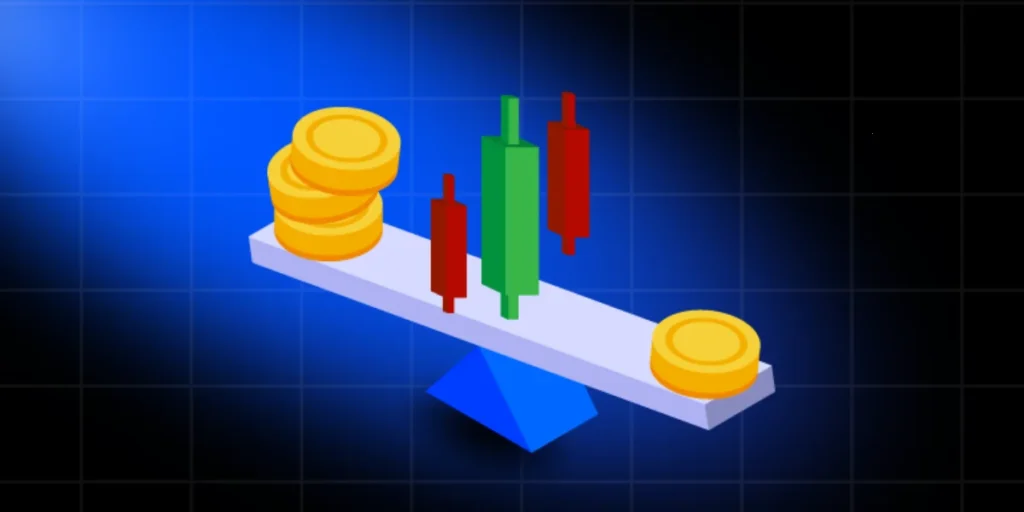
The isolated margin vs cross margin debate is one of the most critical decisions crypto traders face when entering leveraged positions. Leverage allows traders to control positions larger than their deposited capital, amplifying both potential gains and losses. At 10x leverage, a $100 deposit controls a $1,000 position, where a 1% favourable price move yields a 10% return, but a 1% adverse move costs 10% of the margin. Cross margin is the most commonly used mode, utilising the entire account balance to margin all open positions.
Consequently, traders risk losing their entire account in case of liquidation. Isolated margin, on the other hand, offers better flexibility by protecting other portfolio holdings if a single position is liquidated. This guide examines the key differences to help traders determine which is better: cross margin vs isolated margin for their specific trading strategy.
What Is Cross Margin in Crypto Trading?
Cross margin operates as a unified collateral system where traders deploy their entire account balance to support all open positions simultaneously. Unlike traditional trading where each position requires dedicated capital, this approach pools resources across multiple trades.
How Cross Margin Works
Under cross margin, the total account equity serves as shared collateral for every leveraged position. When a trader opens multiple contracts, they all draw from the same margin pool. Unrealized profits and losses from each position continuously adjust the total equity, which supports all trades at once.
In practise, gains from winning positions automatically offset losses on struggling trades. If Position A generates profit whilst Position B faces drawdowns, the unrealized gains from A can keep B above its maintenance margin threshold. For instance, a trader with $10,000 in their margin account can use the entire sum as collateral for Bitcoin, Ethereum, and other futures contracts rather than allocating specific amounts per trade.
Advantages of Cross Margin
Cross margin in crypto trading reduces liquidation risk on individual positions through automatic loss offsetting. Gains from profitable trades cushion losses on weaker ones, potentially preventing forced closures on any single contract.
Capital efficiency improves because unrealized gains increase available margin, allowing traders to deploy funds more effectively. One unit of equity can simultaneously back multiple positions without capital sitting idle. The system also simplifies management, requiring traders to track one consolidated margin balance instead of monitoring each position independently.
For hedged strategies, cross margin proves particularly useful. A long spot paired with a short perpetual allows both legs to offset automatically, reducing required capital.
Disadvantages of Cross Margin
The primary risk involves whole-account exposure. A single catastrophic trade can drain the entire balance, including unrealized gains from other positions. During correlated market crashes, multiple positions moving against the trader simultaneously can consume shared collateral faster than expected.
Cascading liquidation presents another concern. If total equity falls below combined maintenance requirements, platforms may liquidate all positions rather than just the worst performer. Traders cannot quarantine failing trades without closing them or switching to isolated mode.
When to Use Cross Margin
Cross margin suits experienced traders running multi-leg strategies, basis trades, hedged portfolios, or carry trades where positions intentionally offset each other. Traders managing multiple correlated positions and those seeking optimised margin usage across all trades benefit most from this system.
What Is Isolated Margin in Crypto Trading?
Isolated margin in crypto trading assigns a dedicated amount of collateral to each individual position, creating a firewall between trades. Traders allocate a specific margin amount to a single contract, and if that position is liquidated, only the allocated collateral is lost whilst the rest of the account balance remains untouched.
How Isolated Margin Works
Traders select their position size and leverage, then allocate a specific margin amount from their total account balance. The platform uses only that designated sum as collateral for the position. For example, a trader with $15,000 in their account might open a 50x long Bitcoin position with $750 of isolated margin, controlling a $37,500 position. If Bitcoin drops approximately 2% and triggers liquidation, only the $750 allocated margin is lost whilst the remaining $14,250 stays available for other trades.
Each position operates independently within its own collateral bucket. Traders can manually add or remove margin after opening positions, adjusting liquidation thresholds and effective leverage. In practise, this means Position A’s liquidation cannot affect Positions B or C, as surplus funds elsewhere will not automatically rescue a failing trade.
Advantages of Isolated Margin
Strict loss containment stands as the primary benefit. Maximum loss is known in advance, capped at the allocated collateral. Each position has clear risk boundaries, making post-trade analysis straightforward whilst preventing cascading liquidations across the portfolio. Beginners benefit from enforced risk per trade, building position sizing skills without risking entire account balances.
Disadvantages of Isolated Margin
Lower capital efficiency emerges because margin must be posted separately for each position. Gains on one position cannot offset losses on another, eliminating natural hedging opportunities. Faster liquidation occurs due to less collateral buffer against adverse moves. Higher management overhead requires monitoring each position independently, with traders needing to manually top up approaching liquidation levels.
When to Use Isolated Margin
High-leverage speculative trades benefit most from isolated margin, particularly when fixed loss limits prove necessary. Event-driven trades like listings, forks, and airdrop snapshots suit isolated positions where traders define exact risk amounts matching uncertainty levels. Newer traders gain structure through bounded losses per trade.
Related Article: Understanding What is Risk to Reward Ratio: Your Essential Guide to Smarter Trading Decisions
Isolated Margin vs Cross Margin: Key Differences Compared

Understanding the isolated margin vs cross margin comparison requires examining how each mode handles critical trading parameters differently.
Collateral Allocation
Cross margin uses a shared collateral pool to support every open trade. Isolated margin locks margin per position. Cross boosts liquidity flexibility and reduces idle capital, whilst isolated improves operational control and makes allocation rules explicit for each strategy.
Liquidation Risk
In cross margin, liquidation triggers when total equity drops below the account’s maintenance requirement. In isolated margin, only the individual position liquidates. A failed trade closes in isolated mode whilst other positions remain untouched and fully funded.
Capital Efficiency
Cross margin in crypto trading often delivers higher effective leverage because profits and idle balances support new exposure. Isolated margin caps leverage per trade, which reduces tail risk. Cross enables instant reallocation of capital across instruments and venues, speeding execution. Isolated margin demands deliberate re-funding, sacrificing speed when markets move quickly.
Portfolio Protection
Cross margin in crypto trading concentrates exposure at the portfolio level, requiring real-time risk engines and correlation checks. Isolated margin reduces contagion: one strategy failure stays contained, simplifying escalation.
Management Complexity
Cross margin centralises liquidity into one pool, smoothing cash flow. Isolated margin segments capital per trade, simplifying control but increasing total collateral required.
You May Also Be Interested In: The Ultimate Crypto Tax Guide
Which Is Better: Cross Margin vs Isolated Margin for Your Trading Strategy?

Selecting between these modes depends less on which is objectively superior and more on how traders structure their approach to position-level versus portfolio-level risk.
Best Scenarios for Cross Margin
Cross margin in crypto trading performs best for traders running correlated positions where offsetting exposure can carry weaker positions through volatile periods. Pairs trades, such as shorting Bitcoin whilst holding a long position on Ethereum, benefit from shared equity cushions. Market makers and arbitrage strategies gain from efficient collateral use across multiple instruments. Long-term strategies also suit cross margin, as extended holding periods benefit from flexibility during drawdown absorption.
Best Scenarios for Isolated Margin
High-beta and event-driven trades require isolated margin. Token listings, forks, and airdrop snapshots can move sharply, making fixed risk allocation necessary. Speculative positions on volatile altcoins benefit from strict loss containment. Beginners gain structure through enforced per-trade risk limits, building position sizing discipline without account-wide exposure.
Factors to Consider When Choosing
Experience level proves crucial. Cross margin demands active monitoring and correlation analysis. Strategy type matters equally: hedged portfolios favour cross, whilst single directional bets suit isolated. Risk tolerance determines mode selection based on whether traders prioritise capital efficiency or loss containment.
Common Mistakes to Avoid
Mode confusion ranks as the most straightforward error. Traders assuming isolated protection whilst operating in cross mode face unexpected account-wide liquidation. Over-leveraging persists across both modes. Ignoring liquidation mathematics leads to treating distant price levels as impossible rather than minutes away during sharp moves.
Conclusion – Isolated Margin vs Cross Margin
Neither cross margin nor isolated margin emerges as the universal winner in this debate. Cross margin suits experienced traders running hedged strategies who value capital efficiency and can monitor correlated positions actively. Isolated margin serves high-leverage speculators and beginners who require strict loss containment per trade. Traders should evaluate their experience level, strategy type, and risk tolerance rather than searching for a one-size-fits-all solution. The best choice aligns with specific trading objectives and portfolio management capabilities.
Which margin mode is better for crypto trading: cross margin or isolated margin?
Neither mode is universally better—the choice depends on your trading strategy and risk tolerance. Cross margin suits experienced traders running hedged portfolios who value capital efficiency, whilst isolated margin benefits high-leverage speculators and beginners who need strict loss containment per trade.
What does 10x leverage mean in cryptocurrency trading?
At 10x leverage, a £100 deposit allows you to control a £1,000 position. This amplifies both gains and losses: a 1% favourable price movement yields a 10% return on your margin, but a 1% adverse movement costs 10% of your deposited capital.
How does isolated margin protect my trading account?
Isolated margin allocates a specific amount of collateral to each individual position. If that position is liquidated, only the allocated margin is lost whilst the rest of your account balance remains untouched, preventing one failed trade from affecting your entire portfolio.
When should I use isolated margin instead of cross margin?
Use isolated margin for high-leverage speculative trades, event-driven positions like token listings or forks, and volatile altcoin trades where you need fixed risk limits. It’s also ideal for beginners learning position sizing discipline without risking their entire account balance.