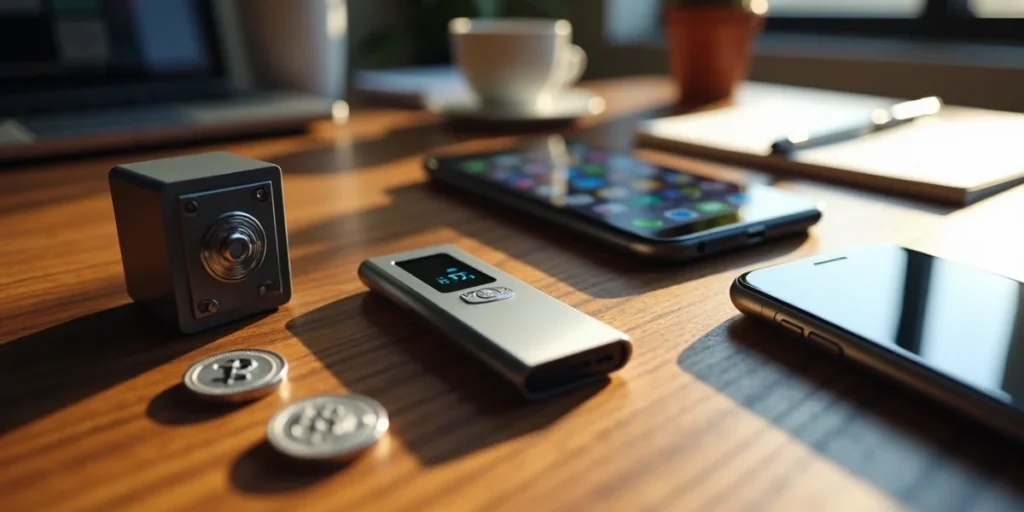
The cold storage vs hot wallet crypto debate centres on a fundamental trade-off: convenience versus security. Hot wallets are internet-enabled and used primarily for transactions, whilst cold wallets are offline and designed for secure storage. Cold wallets provide increased security because they are not connected to the internet, which reduces the danger of hacking. Understanding the distinctions between these storage strategies is critical for securing cryptocurrency holdings by 2026. This guide explores how each wallet type works, compares their security features, and helps determine which option best suits individual needs.
Understanding Hot Wallets: Features and Risks

How Hot Wallets Store Your Crypto
Hot wallets store private keys on devices connected to the internet, enabling real-time sending and receiving of digital assets. These software-based solutions generate seed phrases in an online environment and maintain keys on internet-enabled devices such as smartphones, tablets, laptops, or web browsers. The defining characteristic centres on constant connectivity, which allows wallets to interface directly with blockchain networks for immediate transaction signing and broadcasting.
The wallet generates a private key when first created, encrypts this key, and stores it on the host device. During transactions, the wallet uses this private key to sign operations before broadcasting them to the blockchain network. This process happens within seconds due to the always-on internet connection. However, once a seed phrase or private key is online, there is no way to know whether it remains secret.
Hot wallets exist in several forms. Mobile wallets operate as smartphone applications, offering QR code scanning and on-the-go transaction capabilities. Desktop wallets install on computers, providing more advanced features and control. Web wallets run in browsers, either as extensions that store keys locally or as hosted solutions where third parties manage keys. Exchange wallets are custodial arrangements in which centralised platforms control users’ private keys.
Popular Hot Wallet Providers in 2026
The hot wallet landscape in 2026 features several established providers:
- MetaMask is the dominant Ethereum-focused wallet, with tens of millions of downloads, supports EVM-compatible chains, and offers extensive dApp integration through browser extensions and mobile applications.
- Trust Wallet supports over 100 blockchains and more than 300 cryptocurrencies, with built-in staking, NFT storage, and a native Web3 browser used by 220 million users globally.
- Coinbase Wallet provides self-custody separate from the main exchange platform, supports multiple chains, and offers NFT minting and token swapping.
- Exodus Wallet offers desktop and mobile functionality, supports hundreds of cryptocurrencies, and includes integrated exchange features.
- Phantom focuses on interactions within the Solana ecosystem whilst expanding to Ethereum and Polygon, incorporating real-time scam detection.
- Zengo eliminates seed phrases entirely through Multi-Party Computation technology, protecting over AUD 30.58 billion in assets for 2 million customers.
Security Vulnerabilities
Hot wallets face significant security challenges due to their online nature. In 2024, access-control exploits involving private key theft accounted for 78% of all crypto thefts, surpassing smart contract vulnerabilities, which accounted for just 27%. Permanent internet exposure makes hot wallets susceptible to remote exploits, malware, and real-time hijacking. The June 2023 Atomic Wallet breach resulted in over AUD 152.90 million stolen across 5,500 accounts.
Additional vulnerabilities include in-memory data leakage,, where advanced attackers capture private keys from RAM during operation; exploitable vulnerabilities in third-party libraries; and hardware-based credential theft via USB-debug-enabled devices. Phishing attacks trick users into approving malicious transactions, whilst clipboard hijacking replaces copied addresses with attacker-controlled alternatives. SIM-swap attacks intercept authentication codes, and malware captures keystrokes when users enter passwords.
Use Cases for Hot Wallet Storage
Hot wallets are suitable for specific scenarios where accessibility outweighs security concerns. Active trading requires funds to move quickly between platforms. DeFi participation demands online connectivity for protocol interactions. Daily transactions benefit from instant access for payments and transfers. The general rule suggests keeping only what is needed for near-term use in hot wallets, typically 5-10% of total crypto portfolios, whilst transferring larger holdings to cold storage. Hot wallets excel for small amounts that users can afford to lose if compromised, maintaining convenience for frequent blockchain interactions without risking substantial holdings.
Understanding Cold Storage Crypto Wallets
What Makes a Wallet ‘Cold’
Cold storage removes private keys from internet-connected environments entirely. A wallet qualifies as ‘cold’ when it stores cryptographic keys in an offline device with zero network exposure. Unlike hot wallets, cold wallets never interact with smart contracts or blockchain applications; they serve solely for sending and receiving assets. This isolation protects against remote hacking, malware, and approval-based scams. The private key remains sequestered in a secure environment, authorising outgoing transactions without touching online networks.
Essentially, cold wallets prioritise asset protection over convenience. They operate as vaults for long-term holdings rather than tools for active trading. The defining features include offline key generation, air-gapped transaction signing, and complete disconnection from Web3 interactions.
Hardware Wallet Devices Explained
Hardware wallets keep private keys on specialized chips within physical devices. These custom-built machines have Secure Element chips, the same technology seen in passports and credit cards. The chip generates keys internally and prevents extraction even under an electron microscope. When users initiate transactions, data is transferred to the device, signed with the private key, and only the signed transaction is returned to the computer. The private key never leaves the hardware.
Popular devices in 2026 include Ledger Nano X, Trezor Safe 7, and NGRAVE ZERO. The NGRAVE ZERO holds EAL7 certification, the highest security level on the Common Criteria scale, and uses QR code communication exclusively. Coldcard Q features a laser scanner for QR codes and NFC antennas, deliberately excluding Bluetooth due to security concerns. SafePal S1 offers air-gapped functionality at around AUD 74.92, whilst premium options like Ledger Stax cost AUD 380.72-AUD 610.07.
Paper Wallets and Air-gapped Systems
Paper wallets contain private keys printed as QR codes or alphanumeric strings on physical documents. Users generate keys offline, print them, and destroy digital copies. However, paper wallets have declined since 2016 owing to physical fragility. Ink fades, paper tears, and water damage cause permanent fund loss without recovery phrases.
Air-gapped wallets offer superior offline security. These systems use devices completely isolated from networks, transferring transaction data via QR codes or memory cards. Smartphones can become air-gapped wallets when permanently disconnected from the internet and loaded with wallet software. AirGap Vault, installed on dedicated offline phones, exemplifies this approach.
Deep Cold Storage for Maximum Security
Deep cold storage adds deliberate access barriers. Institutional solutions employ Hardware Security Modules certified to FIPS 140-2 Level 3+, storing keys in physically isolated systems with no connectivity. Multi-factor authentication, including biometric scans, smart cards, and time-based entry protocols, guards physical vaults. Multi-signature schemes prevent single individuals from executing transactions. Geographic distribution across jurisdictions protects against localised disasters.
Why Cold Wallets Cost More Than Hot Wallets
Hardware wallets require an upfront investment ranging from AUD 76.45 to AUD 305.80 for standard models. Premium devices exceed AUD 610.07. The cost reflects Secure Element chips, tamper-resistant design, dedicated screens, and specialised firmware. In contrast to free hot wallet applications, cold wallets demand physical manufacturing and security certification.
Safety Comparison: Cold Storage Wallet vs Hot Storage
Internet Exposure and Hacking Risks
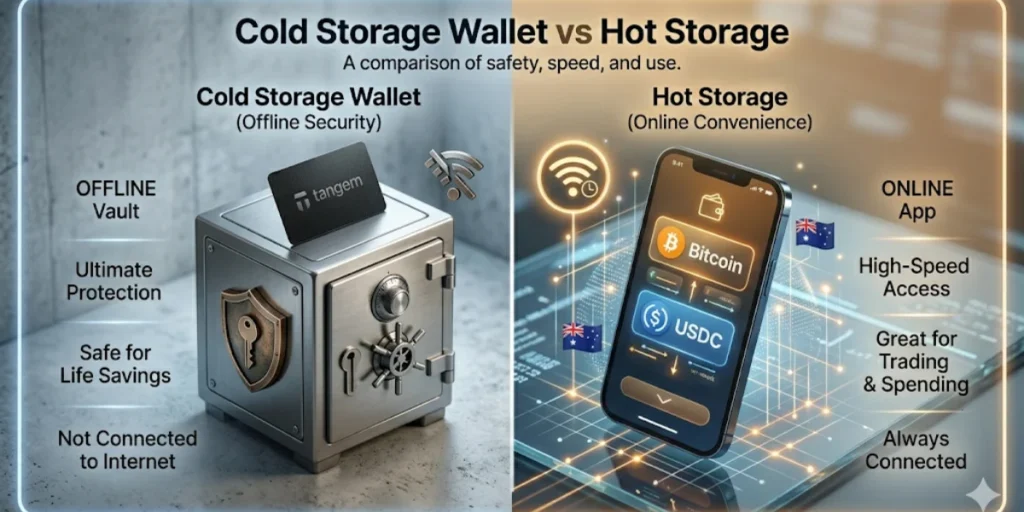
Network connectivity is the main difference between a cold storage wallet and a hot storage wallet. Hot wallets maintain continuous internet connectivity, creating a constant attack surface for fraudsters. This 24/7 online presence enables remote exploitation, memory forensics, and real-time credential hijacking without requiring physical device access. Cold wallets eliminate this vector entirely through complete network isolation, rendering remote hacking attempts ineffective.
The offline nature of cold storage crypto means attackers must physically obtain the device and bypass many security layers, such as PIN codes or biometric authentication. In contrast, hot wallets store private keys on internet-connected devices where sophisticated malware can capture credentials during routine operations. The fundamental architecture creates an inherent vulnerability that no software update can fully mitigate.
Protection of Private Keys and Seed Phrases
Hot wallet private keys exist in online environments from the moment of generation, creating uncertainty about whether they remain confidential. Once a seed phrase has touched an internet-connected device, the possibility of interception persists indefinitely. Cold wallets generate keys in air-gapped environments and never expose them to networked systems.
Hardware wallets isolate private keys within Secure Element chips that prevent extraction even under laboratory conditions. The keys authorise transactions through internal signing processes without leaving the device. Therefore, physical theft of hardware wallets alone is insufficient to grant access to assets. Phishing attacks targeting seed phrases remain effective against both wallet types. A single investor lost AUD 434.23 million in January 2026 after revealing a recovery seed phrase to attackers impersonating Trezor support.
Insurance and Recovery Options
Insurance coverage differs substantially between hot and cold storage. Hot wallet policies protect against theft through hacks and breaches targeting private keys stored online. Cold storage insurance covers physical theft, destruction from natural disasters, and insider collusion affecting offline devices. Most crypto institutions carry commercial insurance, yet policy limits frequently fall short of total losses. During the 2016 Bitfinex breach, customers recovered only 64% of their holdings due to insufficient insurance coverage.
Individual wallet insurance emerged in 2022, allowing retail holders to purchase coverage for specific wallets held at qualified custodians. Cryptocurrency transactions remain irreversible once confirmed. Recovery of lost funds proves impossible through chargebacks or institutional intervention. Specialised data recovery firms can retrieve funds from damaged hardware wallets using controlled lab processes, but cannot recover assets stolen through compromised private keys.
Statistics on Crypto Theft in 2026
April 2026 became the worst month for crypto hacks since February 2025, with protocols losing AUD 926.57 million across 12 incidents in just 18 days. The AUD 435.76 million Drift Protocol exploit and AUD 446.47 million KelpDAO breach, both attributed to North Korea’s Lazarus Group, accounted for 95% of April’s losses. This monthly total exceeded the entire first quarter’s combined losses of AUD 253.05 million by 3.7 times. Year-to-date theft totalled approximately AUD 1,180.07 million across 47 incidents. In January 2026, roughly AUD 611.60 million was drained through 40 recorded incidents, with a lone phishing attack accounting for AUD 434.23 million of that total.
Related Article: Investing Guide 2026: How Markets Are Shaping the Year Ahead
Practical Considerations Beyond Security

Transaction Frequency and Wallet Choice
Portfolio size and trading patterns dictate optimal wallet selection. Users handling frequent transactions benefit from hot wallet access, whilst those prioritising long-term holdings require cold storage. Sophisticated investors implement tiered architectures: 80-95% in cold storage for core positions, 5-20% in hot wallets for active trading and DeFi participation. When holdings exceed AUD 7,644.95-AUD 15,289.90, hardware cold storage provides substantially stronger security than mobile alternatives.
Setting Up and Managing Cold Storage
Initial configuration follows a structured process. After purchasing a device (ranging from AUD 91.74 to AUD 336.38 for mainstream options), users connect via USB, set a secure PIN, and record the 24-word recovery seed phrase offline. Advanced users enable passphrase encryption for additional protection. Testing proves crucial: send small amounts first, verify receipt, then test recovery procedures before depositing significant funds.
Integrating Cold Wallets with Exchanges
Cold-to-exchange workflows require deliberate steps. Users create unsigned transactions on internet-connected devices, transfer them to cold wallets via USB or QR codes for signing, then broadcast signed transactions from online machines. This ensures private keys never touch networked environments. When depositing to exchanges supporting 1,300+ cryptocurrencies, verify network compatibility (ERC-20, TRC-20, BEP-20) and confirm the first and last 6 characters of the address before large transfers exceeding AUD 15,289.90.
Mobile Access and Convenience Factors
Cold storage monitoring doesn’t require exposing private keys. By importing the Master Public Key (xpub) into mobile wallets, users track balances and generate receiving addresses whilst keeping private keys secured on offline devices. However, cold wallets introduce operational friction. Physical button presses authorise every transaction, creating deliberate barriers unsuitable for everyday spending scenarios such as splitting restaurant bills.
Making the Right Choice for Your Crypto in 2026
Assessing Your Security Needs
Wallet selection depends on three factors: transaction frequency, asset value, and the type of blockchain activity. Active traders moving positions daily require hot wallet liquidity, whilst buy-and-hold investors benefit from 80-90% cold allocation. DeFi participants need working hot balances for protocol interactions, yet should separate experimental funds from core holdings. The practical rule centres on comfort with potential loss: keep only amounts acceptable to lose in hot wallets. Risk tolerance shapes each investor’s threshold differently.
Combining Hot and Cold Wallet Strategies
The most effective approach combines both storage types rather than selecting one over the other. A two-tier system maintains small operational balances in hot wallets for flexibility, whilst storing bulk portfolios offline. Institutions increasingly adopt three-tier architectures: hot wallets for daily liquidity needs, warm wallets with policy controls for operational flows, and cold wallets for reserves. This layered structure ensures that compromising a single hot wallet cannot jeopardise the entire holdings.
Recommended Wallet Allocation by Portfolio Size
Portfolio distribution varies by lifestyle and risk appetite. Conservative allocations place 10-20% in hot storage with the remainder cold. Day traders maintain higher hot percentages for trading capital whilst keeping long-term holdings cold. When holdings exceed significant thresholds, hardware cold storage provides substantially stronger protection than mobile alternatives. Accordingly, users should match wallet types to actual usage patterns rather than rely solely on feature specifications.
Future Trends in Crypto Wallet Technology
Wallet technology in 2026 advances beyond traditional seed phrases. Multi-Party Computation wallets like Phantom pilot full MPC protection, splitting key control across devices so recovery doesn’t depend on a single phrase. Seedless recovery models from Bitget and Vultisig eliminate the vulnerabilities of traditional backups. What is more, Big Tech firms, including Google, Meta, and Apple, may launch crypto wallets, potentially exposing billions to digital assets. AI-powered wallets introduce behavioural biometrics and live threat interception, addressing the AUD 5.20 billion in crypto theft during 2025.
Conclusion – Cold Storage vs Hot Wallet Crypto
The cold storage vs. hot wallet crypto debate doesn’t require choosing one option over the other. Cold wallets offer superior security for substantial holdings, protecting assets from the remote hacking threats that cost investors over AUD 1.18 billion in 2026 alone. Hot wallets provide essential convenience for active trading and daily transactions.
The optimal approach combines both storage types. Keep 80-95% of holdings in cold storage for long-term security, whilst maintaining 5-20% in hot wallets for operational flexibility. According to portfolio size and transaction frequency, adjust this allocation to match actual usage patterns rather than theoretical ideals. Essentially, store what users cannot afford to lose offline, and keep only necessary working balances online.
Which type of cryptocurrency wallet offers better security: hot or cold?
Cold wallets are widely considered safer than hot wallets because they store your private keys completely offline, protecting your assets from remote hacking attempts and malware. However, they require extra steps to access funds and cost money to purchase. Hot wallets offer greater convenience for frequent transactions but maintain constant internet connectivity, which creates ongoing security vulnerabilities.
Why do cold wallets cost more than hot wallets?
Cold wallets require an upfront investment ranging from approximately £50 to £250 for standard models, with premium devices exceeding £400. This cost reflects the physical manufacturing of dedicated hardware, Secure Element chips that prevent key extraction, tamper-resistant design, specialised firmware, and security certifications. In contrast, hot wallets are typically free software applications that don’t require physical production.
What percentage of my cryptocurrency should I keep in each wallet type?
The recommended allocation is to keep 80-95% of your holdings in cold storage for long-term security, whilst maintaining 5-20% in hot wallets for operational flexibility and active trading. This distribution should be adjusted based on your portfolio size, transaction frequency, and risk tolerance. The general rule is to keep only amounts you can afford to lose in hot wallets.
Can I monitor my cold wallet balance without exposing my private keys?
Yes, you can track your cold wallet balances and generate receiving addresses without compromising security by importing the Master Public Key (xpub) into mobile wallet applications. This allows you to monitor your holdings whilst keeping your private keys secured on the offline device, providing visibility without sacrificing the security benefits of cold storage.