
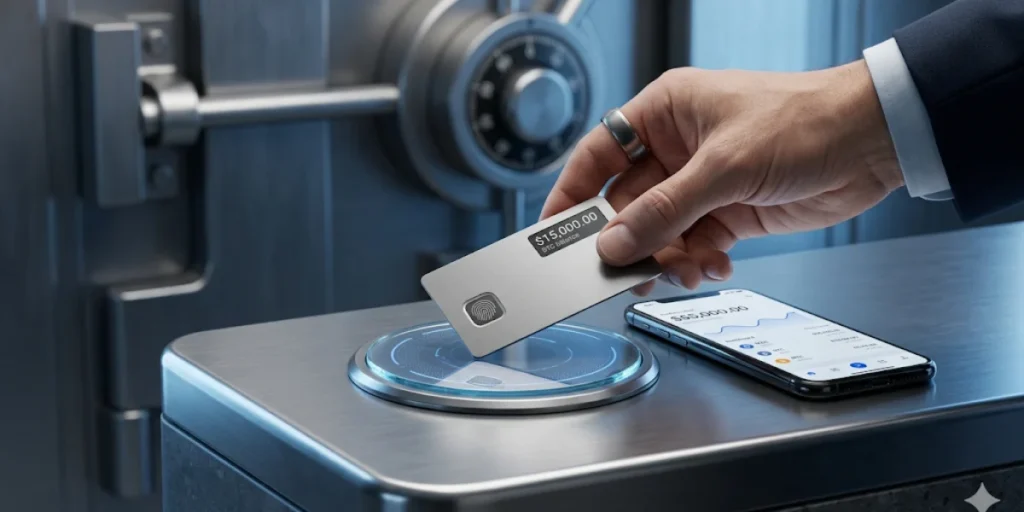
Determining the best crypto hardware wallets is crucial in light of recent hacks that stole $1.4B from the Bybit exchange and $50M from Radiant Capital. Hardware wallets isolate private keys from the internet, providing essential protection that exchange storage cannot match. Trusted manufacturers like Ledger have sold over 7 million devices worldwide, whilst newer options continue emerging. This analysis examines three leading cryptocurrency hardware wallets through security testing, reviews their practical features, and explains proper seed phrase management to help readers select the most suitable hardware wallet for their holdings.
Why a Physical Vault is Essential for Your Profit
The architecture of a hardware wallet creates an air gap between assets and potential attackers. Private keys, which serve as cryptographic proof needed to access and transfer crypto holdings, never leave the physical device during normal operation. This isolation prevents malware, phishing attacks, and remote exploits from extracting credentials even when the wallet connects to a computer for transactions. The device signs transactions internally using a tamper-resistant chip before returning the signed data to the connected application for broadcasting. Attackers cannot compromise keys they cannot reach, and remote access becomes impossible unless someone physically obtains the wallet backup.
Physical possession requirements fundamentally change the threat model. Someone would need to physically steal a hardware wallet to gain potential access to crypto assets. Even theft alone proves insufficient. Hardware wallets use PIN protection, locking users out after three incorrect attempts. Some manufacturers incorporate biometric logins as an additional security layer. The private keys remain within the device’s secure element, making extraction exceedingly difficult even with physical possession of the device. Compromising these tamper-resistant secure elements requires sophisticated techniques and significant resources, making such attacks rare and impractical for most adversaries.
Software wallets on phones or in browsers lack this physical security boundary. Private keys stored on internet-connected devices are constantly exposed to potential threats. A single compromised application, malicious browser extension, or infected computer could leak credentials to attackers. By comparison, hardware wallets ensure private keys never go online, rendering them virtually immune to the hacking risks associated with software storage. Transferring funds to a hardware wallet grants owners full control over their private key and, correspondingly, over their financial freedom.
Security And Protection
The security advantages become particularly relevant for holders managing substantial portfolios. Hardware wallets prove especially useful for storing large amounts of cryptocurrency. There exists no limit to how much cryptocurrency or digital assets can reside in a hardware wallet, since digital currency consists of code rather than physical notes and coins. Many of the best crypto hardware wallets support multiple cryptocurrencies, making them suitable for securely storing entire crypto portfolios. This multi-asset capability allows users to consolidate various holdings under a single security framework rather than managing separate wallets for different tokens.
Authentication mechanisms add further protection layers. Hardware wallets require physical confirmation for every transaction. No one, not even the legitimate owner, can execute a transaction without access to the physical cold wallet. This requirement creates a verification checkpoint that prevents unauthorised transfers even if other security measures fail. The encrypted hardware wallet must verify each transaction, establishing a mandatory physical presence requirement.
Recovery mechanisms provide resilience against device loss or damage. Most hardware wallets have a recovery phrase feature that enables users to recover assets on a new device using a special sequence of words created during initial setup in the event that the wallet is lost, stolen, or damaged. This backup mechanism separates asset security from device security. Users must store recovery phrases in secure locations separate from the physical wallet, preferably not written down within their residence. Maintaining this separation ensures that losing the device does not equate to losing access to funds.
Cost Considerations
Cost considerations factor into many users’ decisions. Unlike software wallets, hardware wallets require an upfront investment ranging from AUD 76.45 to AUD 305.80, depending on brand, features, and functionalities. The expense reflects the specialised hardware components, particularly the certified secure element chip that generates and stores private keys offline. The increased security of a hardware wallet justifies the expense for holders with sizable investments. When protecting larger amounts, the possible advantages in terms of security and peace of mind exceed the initial cost.
Keeping firmware up to date remains necessary to maintain security. Updates protect against known vulnerabilities and enhance overall security. Users must periodically check for and install firmware updates to ensure their devices receive the latest security patches. This maintenance requirement adds a minimal ongoing responsibility beyond the initial setup process.
The fundamental distinction between hardware and software wallets centres on matching the wallet type to usage patterns. For users primarily holding crypto rather than actively trading, hardware wallets offer a more secure option for long-term storage. They offer a secure solution for storing digital assets for extended periods without requiring frequent access. The device functions as a personal bitcoin vault, providing encrypted offline storage that is stored securely in physical possession. This vault analogy captures the core function: creating an impenetrable barrier between valuable digital assets and the internet-connected environment where threats proliferate.
Top 3 Hardware Wallets Reviewed for April 2026
Three manufacturers dominate the cryptocurrency hardware wallet market through distinct approaches to security, usability, and form factor. Each addresses different user priorities whilst maintaining offline key storage as the foundational security principle. Pricing ranges from AUD 84.09 to AUD 227.82 across these options, with feature sets varying accordingly.
Tangem: The Credit-Card Style Wallet (Easiest for Beginners)
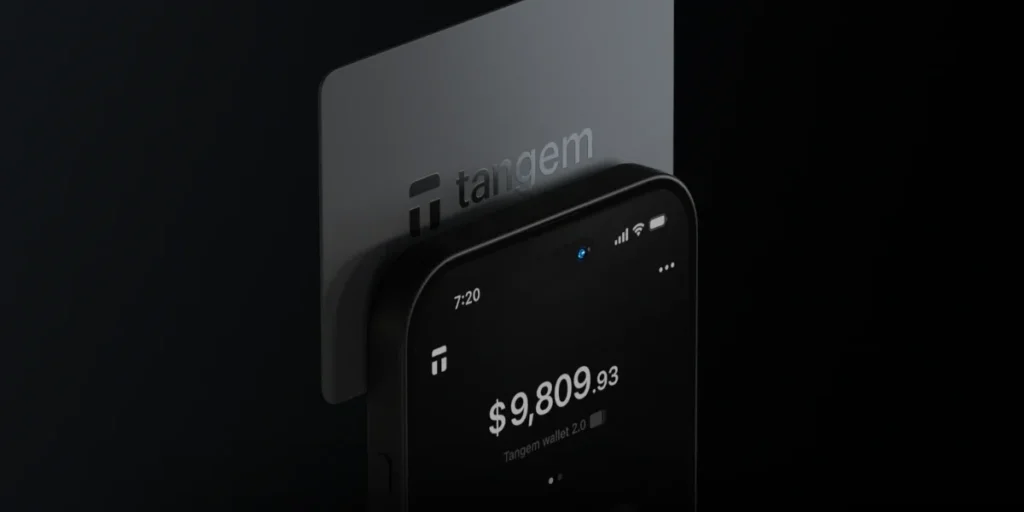
Tangem represents a departure from traditional USB-style hardware wallets with its credit-card-shaped devices that include an in-built secure element chip and an NFC antenna. The wallet comes as a set of two or three physical cards, each measuring the size of a standard payment card, making it exceptionally portable. Setup completes in approximately 3 minutes, making Tangem the fastest hardware wallet to configure.
The card-based design eliminates several components found in conventional hardware wallets. No battery requires charging, no cables need to be connected, and no screen is on the device itself. Users interact with their crypto by tapping the card against NFC-enabled smartphones running the Tangem mobile app, available on both iOS and Android. This tap-to-use functionality mirrors contactless payment systems, helping newcomers feel familiar.
Security architecture centres on a Samsung S3D350A secure element chip certified to EAL6+ standards, matching the security level used in biometric passports and banking systems. The chip generates private keys internally during activation, and these keys never leave the card under any circumstances. Tangem has produced over 2,000,000 devices since 2018, whilst maintaining a perfect zero-hack record. Independent audits by Kudelski Security confirmed the firmware contains no backdoors or vulnerabilities.
The backup system differs markedly from seed phrase approaches. Instead of writing down recovery words, users receive multiple synchronised cards within their purchase set. A two-card pack provides one backup, whilst the three-card pack offers two redundant copies. If one card becomes lost or damaged, the remaining cards retain full access to funds. This multi-card backup removes the burden of managing written seed phrases, though losing all cards simultaneously results in unrecoverable asset loss.
Tangem supports over 16,000 cryptocurrencies and tokens across 85+ blockchains. The wallet integrates buying, selling, swapping, staking, and DeFi connectivity through the mobile application. Pricing structures as follows: the two-card set costs AUD 84.09, the three-card set runs AUD 107.03, and the Tangem Ring bundle (ring plus two cards) reaches AUD 146.78. The physical durability standards include IP69K certification for dust and water resistance, a temperature range of -25°C to +50°C, and a 25-year replacement warranty based on minimum chip lifespan.
Ledger Nano X: The Bluetooth Standard for Mobile Tracking
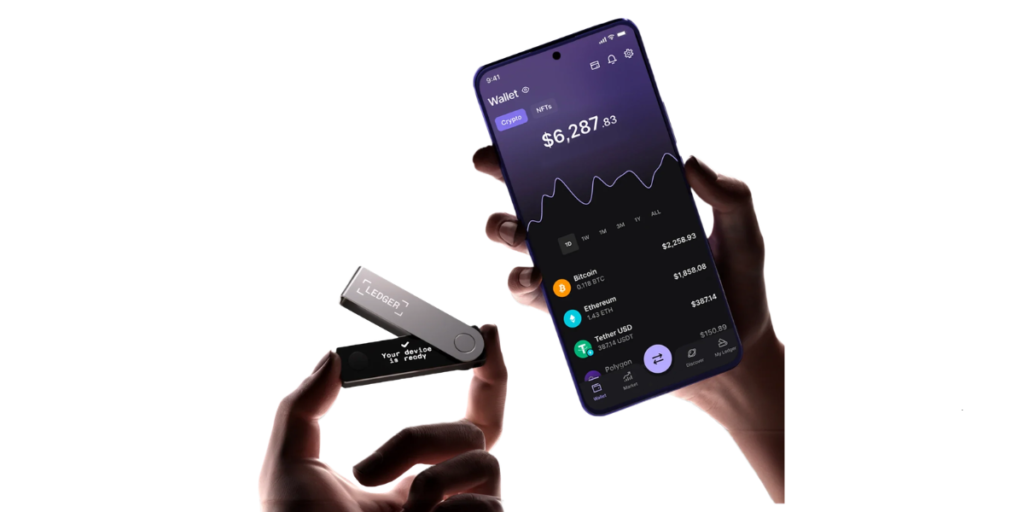
Ledger Nano X delivers Bluetooth Low Energy 5.0 connectivity alongside traditional USB-C functionality, enabling cable-free transactions with smartphones. The device measures 72mm x 18.6mm x 11.75mm and weighs 34 grammes, featuring a brushed stainless steel and plastic construction. A 128×64-pixel OLED screen offers twice the resolution of earlier Ledger models, improving clarity during address verification.
The internal 100 mAh battery provides several hours of active use and multiple months of standby operation on a single charge. When depleted, the device functions via USB-C connection to laptops or smartphones, preventing battery failure from blocking access. Bluetooth implementation uses end-to-end encryption, with private keys never transmitted over the wireless connection. Only public data and signed transaction hashes travel via Bluetooth, whilst the CC EAL5+ certified secure element (ST33J2M0) retains all cryptographic operations locally.
Asset support encompasses over 5,500 coins and tokens through the Ledger Wallet mobile application (formerly Ledger Live). The device accommodates up to 100 simultaneously installed blockchain apps, substantially exceeding the capacity of budget alternatives. Installation, firmware updates, and transaction management all function through either mobile or desktop platforms. Bluetooth pairing is supported only with Ledger Nano X, not with earlier Ledger models.
The numeric comparison pairing protocol prevents man-in-the-middle attacks by displaying matching codes on both the Nano X screen and the smartphone. Users verify these codes match before establishing the encrypted channel. On older Android versions lacking numeric comparison, the device displays a warning message about potential interception risks, though transaction approval still requires physical confirmation on the hardware screen.
Presently, the Ledger Nano X retails for AUD 227.82 through official channels. The gadget has a working temperature range of 0°C to 40°C, although it lacks a waterproof designation despite its overall robustness. The closed-source firmware architecture has sparked community debate, particularly after the 2023 Ledger Recover feature issue. This optional recovery service allows seed phrase sharding to third-party servers, though enrollment remains entirely voluntary.
Trezor Safe 3: Maximum Security for Large Holdings
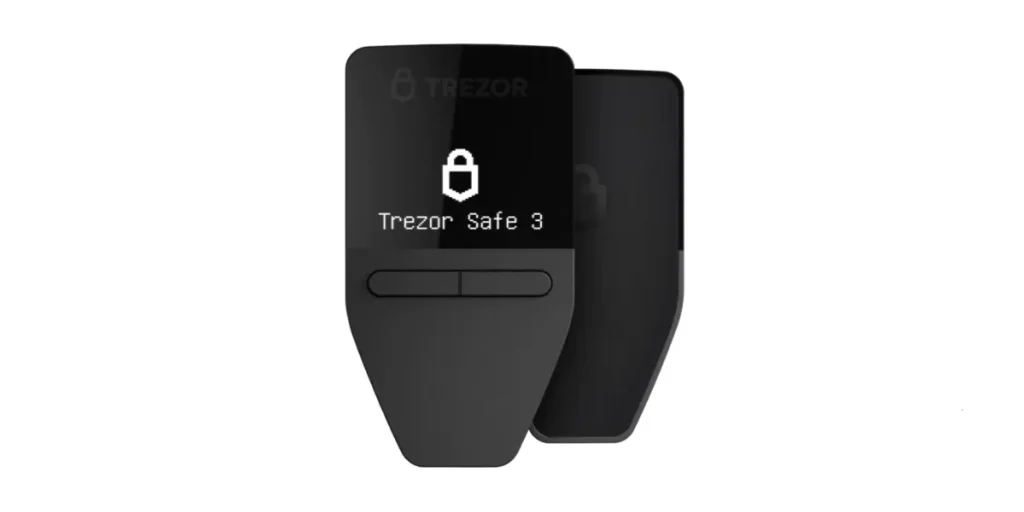
Trezor Safe 3 combines open-source firmware transparency with an Infineon OPTIGA Trust M secure element certified to EAL6+ standards, surpassing the EAL5+ certification found in Ledger devices. This dual-layer architecture addresses previous criticisms that Trezor models lack dedicated security chips whilst maintaining code auditability. The device measures 59mm x 32mm x 7.4mm and weighs just 14 grammes, making it the lightest option among the three reviewed wallets.
The monochromatic OLED screen displays at 128 x 64 pixels and is operated through a two-button navigation system. Connectivity relies solely on USB-C, with no Bluetooth or wireless capabilities included. This wired-only design appeals to users who prioritise simplicity and avoid potential Bluetooth attack surfaces. Compatibility extends to Windows, macOS, Linux, and Android via the Trezor Suite application, though iOS support is limited to portfolio tracking and receiving.
Backup flexibility stands as a distinguishing feature. The Safe 3 supports standard BIP39 recovery phrases of 12, 18, or 24 words, as well as advanced Shamir Backup using the SLIP39 standard. Shamir Backup splits the recovery information into multiple unique shares, requiring only a predetermined threshold of shares to restore access. This method distributes backup risk across physically separate locations without exposing the entire recovery data at any single location.
The secure element performs two specific functions: enhancing the physical security of the PIN protection mechanism and verifying device authenticity. Private keys reside on the general-purpose chip and are encrypted by both the user’s PIN and a secret stored within the secure element. This architecture prevents the secure element from learning the PIN whilst still protecting against extraction attempts.
Asset support covers over 8,000 coins and tokens, including Bitcoin, Ethereum, Solana, Cardano, XRP, and all ERC-20 tokens. Native integration exists for major chains through Trezor Suite, whilst less common assets require third-party wallet software. The device currently lists at AUD 120.79 before destination-specific taxes or customs fees. A Bitcoin-only variant exists with identical security specifications but firmware limited exclusively to Bitcoin operations.
Each wallet addresses different priorities within the self-custody spectrum. Form factor, connectivity options, breadth of asset support, and price points create distinct positioning for different user requirements.
The Truth About Seed Phrases
Seed phrase security is the ultimate vulnerability in cryptocurrency ownership. Losing this master key permanently means losing access to assets, whilst leaking it enables immediate theft. The single most important part of a crypto hardware wallet extends beyond the device itself to the backup system protecting the cryptographic foundation.
Manage Your ‘Master Key’
Never photograph seed phrases on phones or computers, as these files migrate to cloud storage or become vulnerable to malware. Anyone requesting a seed phrase online is operating a scam. The only legitimate entry point occurs within trusted wallet applications during recovery. Spreading multiple copies across different secure physical locations protects against fire, flooding, or theft at a single location. Hardware wallets from Ledger or Trezor support an additional passphrase as the 25th word, providing an extra layer of encryption. Even if someone obtains the seed phrase, they cannot access funds without this passphrase.
Titanium Storage vs a Piece of Paper
Paper degrades predictably through fire, water exposure, humidity, ink fading, and physical deterioration. Metal backups address common paper failure modes without adding cryptographic complexity. Titanium plates offer extreme durability with very high melting points, remaining fireproof, waterproof, and timeproof. Products like ColdTi use commercially pure Grade 2 titanium and accept any 12- or 24-word seed. Steel backups resist fire and water compared to paper, making them suitable for long-term single-person custody where physical durability matters most.
Conclusion – Best Crypto Hardware Wallets
Hardware wallets provide essential protection against the billions lost annually to cryptocurrency theft. Each reviewed option delivers distinct advantages: Tangem offers card-based simplicity for beginners, Ledger Nano X provides Bluetooth convenience for mobile users, and Trezor Safe 3 delivers maximum security through open-source transparency. Above all, selecting the appropriate device matters less than properly securing the seed phrase. Metal backups outlast paper alternatives, whilst physical separation of recovery words prevents single-point failures. Holders managing substantial portfolios gain peace of mind knowing their private keys remain isolated from internet-connected threats. The upfront investment proves worthwhile when protecting digital assets from remote attackers who cannot compromise what they cannot reach.