Australia crypto mining has evolved from a niche hobby into a mainstream business opportunity, with a third of Aussies now owning digital assets and 70% of crypto investors holding Bitcoin. Whilst crypto mining plays an essential role in validating and securing blockchain transactions, many Australians still question what is crypto mining, is crypto mining legal in Australia, and whether operations remain profitable in 2026. The good news: mining cryptocurrency is perfectly legal in Australia, though success depends on understanding compliance requirements, equipment costs, electricity expenses, and changing market conditions. This guide examines everything prospective miners need to know about establishing profitable and compliant operations.
What Is Crypto Mining and How Does It Work in Australia?
The Mining Process Explained
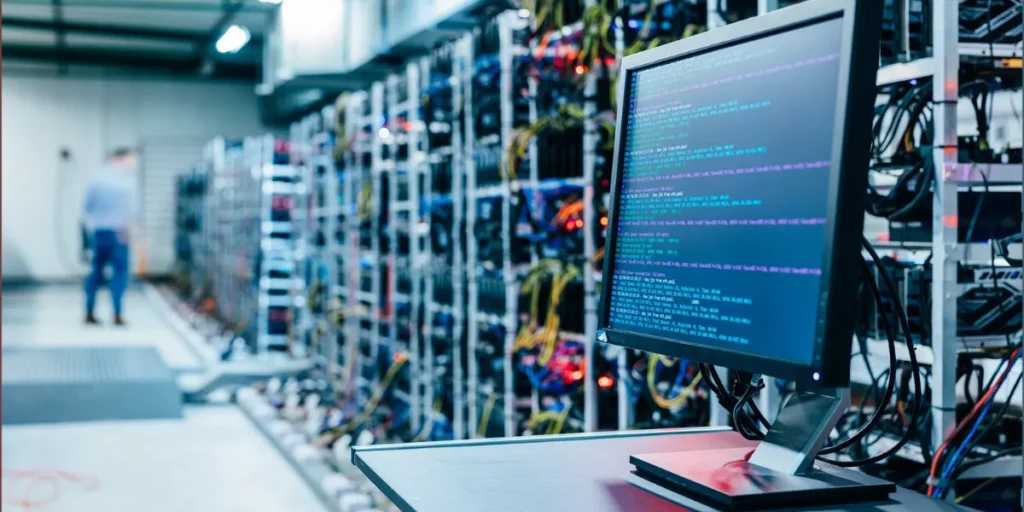
Cryptocurrency mining serves three critical functions within blockchain networks: transaction validation, block creation, and issuance of new coins. Miners use specialised computers to solve cryptographic puzzles, searching for a valid hash that locks blocks of transactions into the blockchain. This process resembles a lottery where participants spend electricity and computing power, with approximately one winning miner earning rewards every ten minutes.
The technical mechanics involve feeding candidate block data through Bitcoin’s SHA-256 algorithm repeatedly until miners find a hash meeting the network’s difficulty target. Each candidate block contains pending transactions, the previous block’s hash, and a variable number called a nonce. Miners generate trillions of hashes per second, adjusting the nonce value with each attempt until discovering a valid solution. The network recalibrates difficulty every 2,016 blocks (roughly two weeks) to maintain the ten-minute block interval. When more miners join, the puzzle becomes harder; when miners leave, difficulty eases.
Before attempting any puzzle, miners verify every transaction in their candidate block by checking digital signatures, confirming coins aren’t being double-spent, and ensuring all protocol rules are met. Thousands of independent miners perform this verification without central authority. As of September 2025, Bitcoin’s network secured itself with 1,041,437,128,989 terahashes per second of computational power. By April 2026, network difficulty reached approximately 139 trillion with global hashrate around 1,000 EH/s.
Proof of Work vs Proof of Stake
Proof of Work (PoW) and Proof of Stake (PoS) represent fundamentally different approaches to blockchain consensus. PoW requires miners to solve complex mathematical puzzles using computational power, making blockchain alteration extremely expensive through real-world energy costs. The more distributed mining power becomes, the harder manipulation grows. Any attempt to rewrite transactions or double-spend would require surpassing the combined hash power of honest miners, an economically self-defeating undertaking.
PoS operates differently. Validators are selected based on cryptocurrency holdings they stake as collateral rather than computational competition. The more coins validators stake, the higher their selection chances. This mechanism eliminates energy-intensive puzzle solving, significantly reducing power consumption. Bitcoin uses PoW with approximately ten-minute block times, whilst Ethereum transitioned to PoS in 2022, achieving twelve-second block confirmations.
Critics note PoW’s high energy consumption and slower speeds, whilst supporters highlight its established security record since Bitcoin launched in 2009. PoS faces criticism for potential centralisation if large stakeholders accumulate control, though it offers faster transactions and lower barriers to participation.
Mining Rewards and Transaction Fees
Miner revenue comprises two components: block subsidy (newly created bitcoins) and transaction fees from included transactions. On April 20, 2024, the block reward dropped from 6.25 BTC to 3.125 BTC during the latest halving event. These halvings occur every 210,000 blocks (roughly four years), ensuring Bitcoin’s supply never exceeds 21 million coins. The next halving is expected around April 2028, when rewards will decrease to 1.5625 BTC.
Initially, Bitcoin issued 50 BTC per block in 2009. Each subsequent halving cuts this reward in half, with the final subsidy expected to reach zero around 2140. At that point, miners will earn compensation solely through transaction fees. Transaction fees become particularly significant during periods of high network activity. In late 2025, during peak inscription activity, transaction fees in some blocks actually exceeded the 3.125 BTC block reward itself. As of 2026, fees stabilised around 15% of total miner revenue.
Is Crypto Mining Legal in Australia? 2026 Regulatory Framework
Current Legal Status of Crypto Mining
No law in Australia bans the act of mining cryptocurrency. The activity remains entirely legal, though miners must comply with general laws that apply to businesses and data centres. Key compliance areas include planning and zoning, electrical and fire safety, noise and heat emissions, landlord or strata permissions, workplace safety for staffed operations, consumer protection when selling services, privacy requirements, and taxation.
Pure mining activity typically does not require a crypto-specific licence. Nonetheless, commercial-scale operations can trigger local council planning or development approvals, particularly where high power draw, heat extraction, or industrial activity occurs. Miners must adhere to energy consumption standards and other relevant regulations.
Consumer Protection and Financial Services Compliance
Miners providing hosting, pooled services, or selling rigs must comply with the Australian Consumer Law. This includes avoiding misleading statements about expected returns or uptime, providing services with due care and skill, and offering appropriate remedies. Claims about profitability or guaranteed returns carry risk, as marketing must align with Section 18 of the ACL regarding misleading or deceptive conduct.
Building products that pool customer funds, promise passive investment features, or share profits could enter managed investment scheme or financial product territory. Such activities may require an Australian Financial Services Licence and trigger strict disclosure and conduct rules. Firms providing services related to digital assets that are financial products must lodge an AFSL application by 30 June 2026.
Tax and GST Obligations for Miners
Miners carrying on a business treat crypto assets received from mining as trading stock. The Australian Taxation Office requires businesses to account for trading stock values at the end of each income year.
Miners operating enterprises registered for GST, or required to register, face GST consequences when mining digital currency. If annual GST turnover reaches $75,000 or more, GST registration becomes mandatory. Supplying mining services to Australian mining pool operators creates taxable supplies requiring GST payment on services rendered. Conversely, supplying mining services to non-resident mining pool operators located outside Australia results in GST-free supplies.
Miners can claim GST credits for purchases related to making taxable or GST-free supplies of mining services. These credits apply to equipment purchases and energy costs directly related to providing mining services.
Setting Up a Crypto Mining Operation: Costs and Requirements

Hardware Costs: ASICs vs GPU Mining Equipment
Establishing a mining operation in Australia requires selecting between two hardware types with vastly different cost profiles. ASIC miners designed specifically for cryptocurrency mining range from AUD 3,057.98 to AUD 9,173.94 for current-generation models, whilst high-end units can exceed AUD 22,934.85. In contrast, GPU rigs typically cost between AUD 4,586.97 and AUD 10,702.93, though they deliver significantly lower efficiency for Bitcoin mining.
Modern ASIC models such as the S19J Pro+ operate at 16 J/TH whilst the S21 achieves 14.4 J/TH, consuming far less power per unit of computational output than GPU miners running at 30-50 J/TH. This efficiency advantage translates directly into lower electricity costs and faster return on investment. ASICs tend to last between three to five years when properly maintained, whereas GPUs degrade more quickly due to thermal variability. Graphics cards maintain higher resale value due to their versatility in gaming and other applications, offering an exit strategy if mining becomes unprofitable.
Electricity Costs and Power Consumption in Australia
Electricity represents the dominant ongoing expense in Australia crypto mining operations. A typical ASIC draws between 3,000 and 5,500 watts continuously. In Melbourne, residential electricity costs range from AUD 0.38 to AUD 0.54 per kWh, resulting in monthly power bills between AUD 1,376.09 and AUD 3,057.98 for a single miner running continuously. Regional variations matter considerably, with Western Australia, South Australia, and Queensland offering relatively lower electricity prices for commercial setups.
Cooling, Ventilation and Infrastructure Expenses
Heat management becomes critical when single units produce between 1,300 and 3,500 watts of thermal output. Basic cooling solutions including fans and air conditioning cost AUD 152.90 to AUD 764.50, whilst larger operations require advanced systems ranging from AUD 1,528.99 to AUD 7,644.95. Australia’s hot climate, particularly in Queensland and the Northern Territory, demands effective cooling to maintain optimal performance.
Planning Approvals and Electrical Safety Compliance
Commercial-scale operations can trigger local council planning or development approvals, particularly where high power draw or industrial activity occurs. Licenced electricians must perform load calculations, install dedicated circuits, and ensure compliance with Australian Standards. ASIC miners, being high-power machines, must meet electrical safety requirements to operate safely within Australia’s infrastructure.
Location Selection: Home vs Commercial Mining
Home mining faces constraints including residential circuit limitations and noise concerns. Hosted mining alternatives require initial investments between AUD 7,644.95 and AUD 18,347.88 per ASIC miner but provide access to significantly lower electricity rates. Australian hosting facilities typically charge AUD 0.18 to AUD 0.31 per kWh including maintenance and security services.
Is Crypto Mining Profitable in Australia? 2026 Analysis
Mining Difficulty and Network Hash Rate Impact
Profitability hinges on hash price, the revenue miners earn per unit of computational power. Hash price represents expected revenue from block rewards plus transaction fees. As of late 2024, Bitcoin’s hash rate climbed 394% since the 2020 halving, whilst the network collectively performs trillions of proof-of-work calculations each second. Mining operates as an extremely competitive industry where profit margins constantly approach production costs. When production costs exceed hash price, miners shut down machines, driving difficulty downward; the inverse brings unprofitable miners back online, compressing margins again.
Bitcoin Halving Effects on Profitability
The April 2024 halving immediately slashed daily issuance value, forcing miners to reassess operations. Each mining rig possesses its own profitability threshold, with operators’ survival depending on financial reserves to withstand negative pressure. Historically, bitcoin price growth offsets reduced block subsidies, though price increases carry no guarantee. Transaction fees averaged around 1% of miner revenues outside bull markets, reaching 7% during peaks. Post-halving all-in cash costs for top listed miners average approximately AUD 68,800 per bitcoin.
Calculating Your Break-Even Point
Major mining operations maintain profitability only when Bitcoin exceeds approximately AUD 107,029.32. Regional electricity costs create vastly different thresholds: North American miners break even between AUD 103,971.34 and AUD 110,087.30, whilst Central Asian operations achieve profitability from AUD 94,797.39. Electricity typically constitutes 60-80% of operational costs.
Mining Pools vs Solo Mining Returns
Solo mining with 90 TH/s yields an expected block discovery time of approximately 180 years at current network difficulty. Pool mining delivers predictable daily payouts despite 1-2.5% fees. Over 95% of individual miners participate in pools on account of consistent income and operational simplicity.
Managing Risks and Legal Compliance for Australian Miners

Insurance and Liability Protection
Australian crypto miners face operational risks requiring specialised insurance coverage. Property and Business Interruption policies protect mining equipment, servers, and facilities against physical damage, with particular focus on fire risk and service interruption exposures. Directors & Officers Liability Insurance becomes essential for operations raising capital or contemplating public offerings. Cyber Liability Insurance covers network breaches and system failures causing business interruption, whilst Crime Insurance protects against internal and external theft of digital assets in hot, warm, or cold storage. General Liability Insurance addresses bodily injury or property damage occurring at physical locations. Workers’ Compensation covers employee injuries in environments with specialised equipment and high electrical usage.
Noise Regulations and Neighbour Complaints
Residential noise regulations vary across Australian states with strict prohibited times. In Victoria, power tools and equipment cannot be heard in neighbours’ habitable rooms before 7am or after 8pm on weekdays, or before 9am and after 8pm on weekends. South Australia mandates construction activities occur only between 7am to 7pm, Monday to Saturday. Tasmania permits lawnmowers and power garden equipment from 7am to 8pm weekdays, 9am to 8pm Saturdays, and 10am to 8pm Sundays. Council officers assess whether noise unreasonably interferes with neighbours’ wellbeing, considering volume, intensity, duration, and timing.
Fire Safety and WHS Requirements
Work Health and Safety legislation applies to all Australian workplaces, including crypto mining operations. The WHS Act 2020 and supporting regulations require mine operators to ensure health and safety through risk elimination or minimisation. Mine Safety Management Systems must include principal hazard management plans, risk assessments, and emergency response procedures. Fire risk assessments must identify potential hazards including electrical equipment malfunctions, adequate firefighting equipment installation, and emergency service consultation. Fire events destroying property valued over AUD 764,495.12 require Coroner notification.
Service Agreements for Hosting Operations
Colocation providers need coverage for storage containers housing mining equipment, whilst miners leasing space require protection solely for their computers. Commercial liability coverage becomes necessary where equipment malfunctions cause damage to other miners’ property. Hosting agreements should specify insurance responsibilities, maintenance obligations, and liability allocation.
Privacy Policies and Data Protection
Mining operations collecting personal information must comply with Australian Privacy Principles under the Privacy Act 1988. Businesses must present clear privacy collection notices before or at time of collection, explaining what information is collected, why it’s collected, and who receives it. Blockchain’s immutable nature conflicts with Privacy Act requirements to destroy or de-identify personal information once no longer needed. Entities must disclose that collected information cannot be deleted due to blockchain technology.
Conclusion – Australia Crypto Mining
Australia crypto mining remains legal and potentially profitable in 2026, though success demands careful navigation of costs, regulations, and market conditions. Prospective miners must balance hardware investments between AUD 3,058 and AUD 22,935, ongoing electricity expenses consuming 60-80% of operational costs, and compliance with AUSTRAC registration, taxation, workplace safety, and local council requirements.
Profitability hinges primarily on electricity rates, with commercial operations requiring Bitcoin prices above AUD 107,029 to break even, whilst regional locations offering sub-AUD 0.23/kWh power maintain competitive advantages. Pool mining delivers consistent returns for individual operators, whilst hosted solutions eliminate infrastructure headaches at the expense of control. By the same token, miners who thoroughly research compliance obligations, calculate break-even thresholds accurately, and implement proper risk management through insurance and safety protocols position themselves for sustainable operations in Australia’s evolving digital asset sector.
Is cryptocurrency mining legal in Australia?
Yes, cryptocurrency mining is completely legal in Australia. There are no laws banning the activity, though miners must comply with general business regulations including planning approvals, electrical safety standards, taxation obligations, and workplace safety requirements. Commercial operations may need local council approvals, and if you provide exchange services alongside mining, AUSTRAC registration becomes necessary.
How much does it cost to set up a crypto mining operation in Australia?
Initial hardware costs range from AUD 3,058 to AUD 22,935 for ASIC miners, or AUD 4,587 to AUD 10,703 for GPU rigs. Beyond equipment, you’ll need to budget for cooling systems (AUD 153 to AUD 7,645), electrical infrastructure upgrades, and planning approvals. The dominant ongoing expense is electricity, with a single ASIC miner consuming AUD 1,376 to AUD 3,058 monthly in power costs at Melbourne residential rates.
Can you make a profit from Bitcoin mining in Australia in 2026?
Profitability depends heavily on electricity costs and Bitcoin’s market price. Major mining operations require Bitcoin prices above approximately AUD 107,029 to break even, with electricity typically representing 60-80% of operational costs. Miners with access to electricity rates below AUD 0.23 per kWh maintain competitive advantages, whilst those paying residential rates of AUD 0.38 to AUD 0.54 per kWh face significant challenges achieving profitability.
What are the tax obligations for crypto miners in Australia?
Miners operating as businesses must treat mined cryptocurrency as trading stock and account for its value at year-end. If your annual GST turnover reaches AUD 75,000 or more, GST registration becomes mandatory. You’ll need to pay GST on mining services supplied to Australian pool operators, though services to non-resident operators are GST-free. You can claim GST credits on equipment purchases and energy costs related to mining activities.